Auteursarchief: Pieter Boulogne

Pieter Boulogne's avatarVan Poesjkin tot Poetin en snel terug

Op 17 augustus 2012 zijn drie leden van de Russische punkrockband Pussy Riot elk tot 2-jaar strafkamp veroordeeld omdat ze zich op 21 februari 2012 in de Moskouse Christus-de-Redder-Kathedraal tot de Moeder van de Laatsgenoemde hebben gericht met een tot nog toe onverhoorde muzikale smeekbede om Rusland te verlossen van Poetin. Hieronder enkele beelden van de betoging in Brussel tegen dit rechtelijk miskraam. Voor meer informatie over de manieren om deze politieke gevangenen te steunen, zie http://freepussyriot.org.

View original post

The French Influence in the Early Dutch Reception of Dostoevsky’s Brat’ja Karamazovy. A Case Study

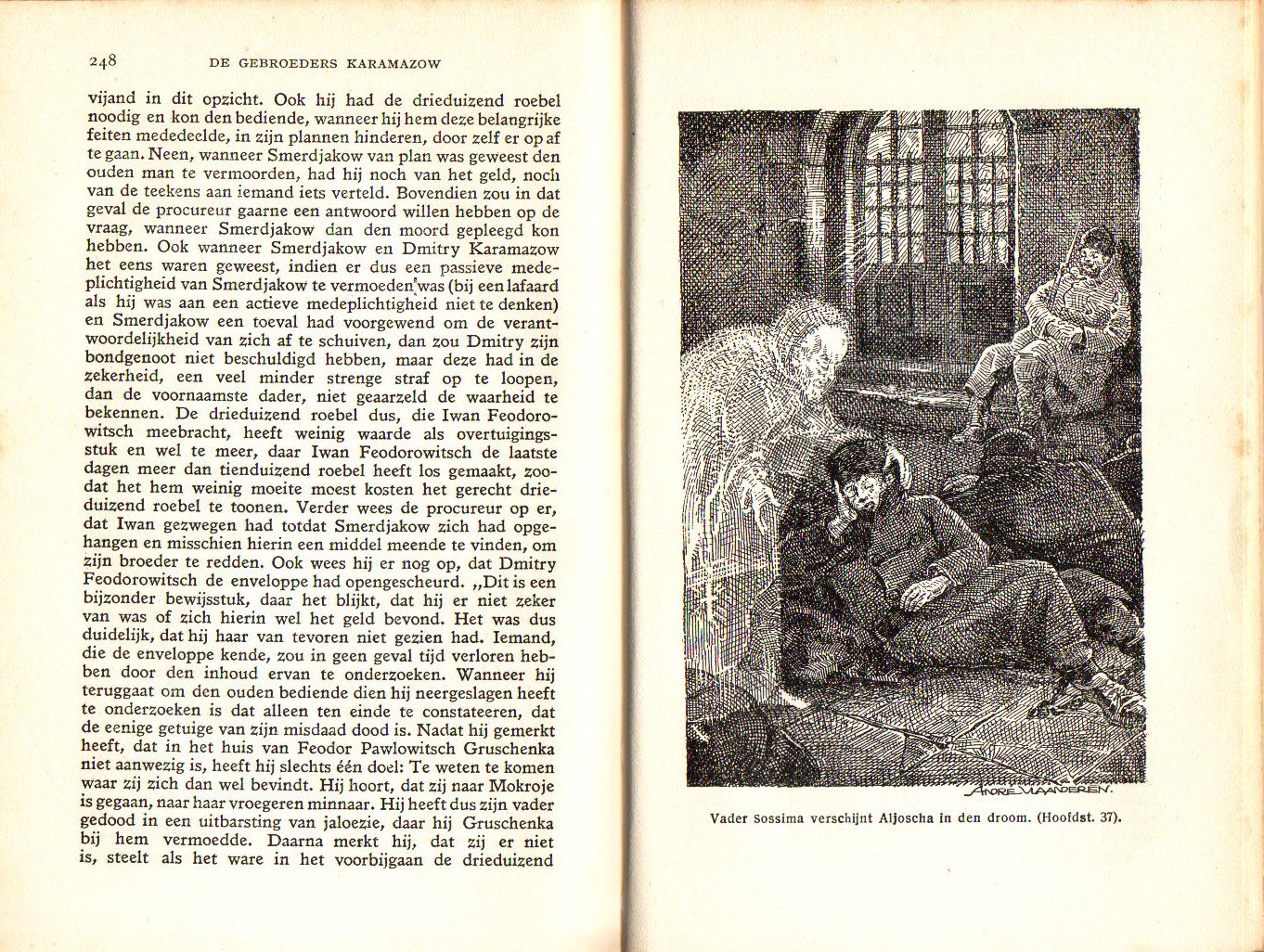
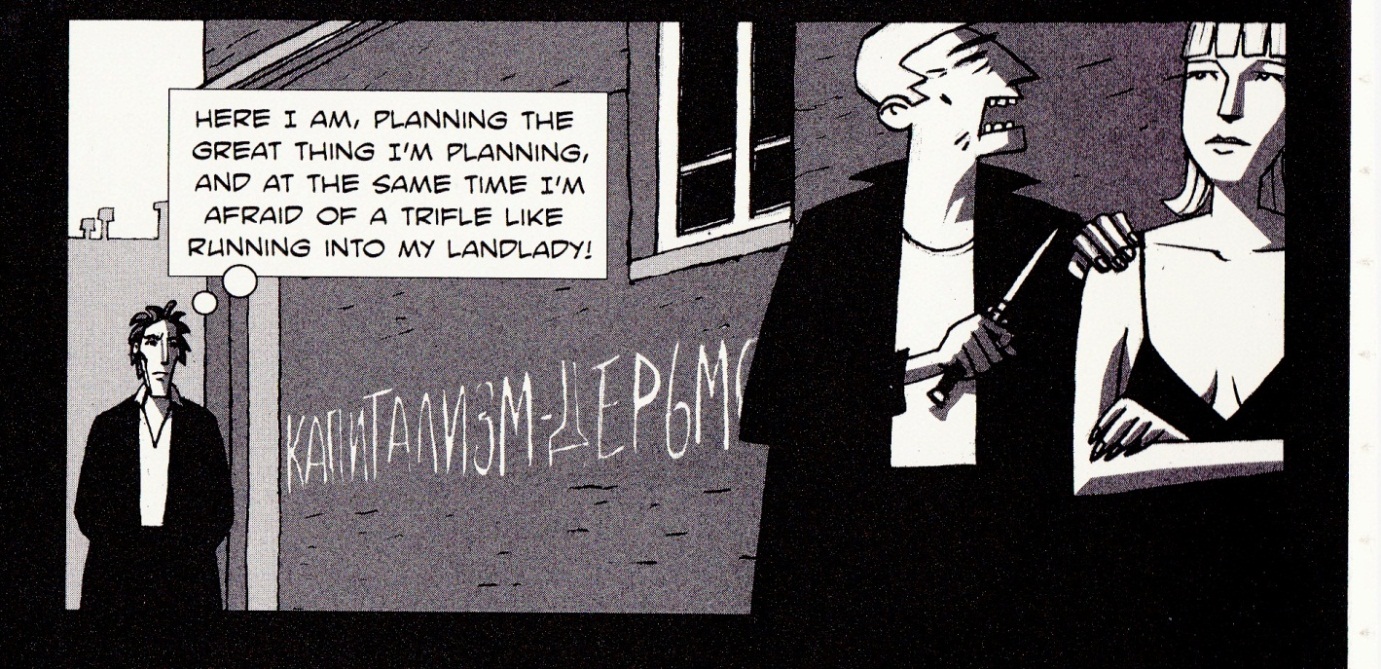
Page from a Dutch translation of Brat’ja Karamazovy, with an illustration of a scene that was invented by the French translators Halpérine-Kaminsky and Morice

1. Introduction

In Germany and France translations of practically all major and minor novels by Fëdor Mihajlovič Dostoevsky (1821-1881) were published, and often reprinted, before the outbreak of the First World War.[1] The German public immediately accepted Dostoevsky as modern and thanks to the particular popularity of his works in German translation “ergriff die russische Literatur breitere Schichten des Publikums und fand eine größere Resonanz als zuvor” (Hoefert 1974: viii). Among the French, Dostoevsky’s name had already become a household word by the end of 1880s, and “everyone in France had read, or pretended to have read” his main works (Hemmings 1950b: 2).

In the Dutch-speaking regions of Europe, however, the reception of Dostoevsky had a particularly slow beginning. The very starting point of this reception was the publication in 1881 of the obituary notice “Necrologie van Feodor Dostoieffsky”in the literary journal De Portefeuille (1880-1881: 443). Nevertheless, four years later he was still a total stranger to the average Dutch reader. An article of the newspaper De Amsterdammer of 1885 speaks for instance of Dostoevsky in terms of “the great Russian writer, unknown in this country” (Cooplandt 1885: 10; my translation from Dutch).

During the three decades that followed the discovery of Dostoevsky, the Netherlands and Flanders showed very little interest in his works. Of all his major novels only the Dutch translations Schuld en boete (Dostojewsky 1885, Crime and Punishment) and De gebroeders Karamazow (Dostojefsky 1913, The Brothers Karamazov) had appeared before the First World War.[2] Both translations were moreover intermediated: Schuld en boete (1885) is a translation from the German and De gebroeders Karamazow (1913) was established through French.

Recent descriptive translation research (De Mesel 2004) has proved that Schuld en boete (1885), translated through the German work Raskolnikow (Dostojewskij 1882), is a rather adequate translation of Dostoevsky’s original. This is not the case of De gebroeders Karamazow (1913), the translation made by the social-democratic author Anna van Gogh-Kaulbach (1869-1960).

The present article focuses on the particular nature of the latter translation – i. e. the very first and until the 1930s only Dutch translation of Dostoevsky’s Brat’ja Karamazovy (1879-1880) – and on the motives underlying the adapted translation strategies. The article is structured as follows. In the second part, titled “Mitja’s prison break”, I will discuss the translational status of De gebroeders Karamazow (1913) and the most remarkable shifts vis-à-vis Dostoevsky’s original work, which are situated in its epilogue. The third part of the article is dedicated to the early French reception of Brat’ja Karamazovy, or more specifically, to the first French translation of the latter, to its translators and critics. In the fourth part of this article, I will explain the particular nature of De gebroeders Karamazow (1913) by referring to the impact of the French reception of Brat’ja Karamazovy on the Dutch reception of the same work.

2. Mitja’s prison break

The fact itself that De gebroeders Karamazow (1913) by Anna van Gogh-Kaulbach, was not translated directly from the Russian, but through French, was not kept secret by the editor; it is mentioned explicitly on the title page of its third edition (1917). The existing bibliographies[3] of Russian literature in Dutch translation, for their part, do not mention which French version of Brat’ja Karamazovy served as the effective source text for the Dutch translation; until now this has never been researched by scholars.

A comparison of De gebroeders Karamazov (1913) with the early French translations of the same source text, has shown that this Dutch translation is a remarkable amalgam of two different French translations; about ninety-five percent of the pages (namely pp. 1-418) are translated from Les frères Karamazov (Dostoïevsky 1906), a translation by Jean-Wladimir Bienstock and Charles Torquet. The remaining five percent (pp. 418-442) are though translated from Les frères Karamazov (Dostoïevsky 1888) – a polemical translation by Ely Halpérine-Kaminsky (1858-1936).

The translated episodes from the latter translation concern only the last six chapters of De gebroeders Karamazow (1913). For the sake of clarity it must be added that Dostoevsky’s original novel contains four parts and an epilogue, which consists of only the following three chapters: I. Proekty spasti Mitju (The projects to save Mitja), II. Na minutku lož’ stala pravdoj (For a little while a lie became truth)andIII. Pochorony Iljušečki. Reč’ u kamnja (The funeral of Iljušečka. The speech by the stone).

The epilogue of De gebroeders Karamazow (1913), however, continues with six other chapters, titled as follows: IV. De keuze (The choice) , V. Mitia’s vertrek (Mitja’s departure), VI. Mitia’s ontvluchting (Mitja’s escape), VII. Vader Zossima (Father Zosima), VIII. Weer een Karamazow (Again a Karamazov) and IX. De uitspraak (The verdict).

The six added chapters in question did not originate from Dostoevsky’s genius, but they are the fruit of the fetterless imagination of the French translator Halpérine-Kaminsky and the obscure romantic poet Charles Morice (1861-1919). It should be stressed that Morice did not understand a single word of Russian (cf. Dostoïevsky 1929: vi-vii); he was not involved in the translating process in the narrow sense of the word.

In Dostoevsky’s Brat’ja Karamazovy (1879-1880), the plans to liberate Mitja Karamazov from jail, which come up in the epilogue’s first chapter, I. Proekty spasti Mitju (The projects to save Mitja), are not carried out. The novel ends, somehow unsatisfactorily, with Alëša Karamazov’s moralizing speech after the funeral of the little boy Iljušečka. In defence of Dostoevsky one could argue that he intended to write a sequel to his Brat’ja Karamazovy.[4] This plan was foiled, however, by his unexpected death from emphysema on 28 January / 9 February 1881.

The epilogues of Les frères Karamazov (1888) and De gebroeders Karamazow (1913) provide Dostoevsky’s last novel with a much more spectacular ending. Encouraged by Katerina Ivanovna, Alëša decided to action. On the eve of the departure of the convoy of the sentenced to Siberia, he and the seductive Grušenka, both disguised as peasants, visit the jail in which Mitja is imprisoned. Having plied an officer with lots of brandy and having bribed some guards, Alëša, who promptly turns out to be born a manipulator, manages to set his brother free. Instead of eloping himself, he takes the place of his brother in jail, completely voluntarily. Almost immediately after the departure of his brother, Alëša falls asleep. In his dream, he has a vision of his mentor; the deceased monk Zosima.

Writing this vision, Halpérine-Kaminsky was inspired by the sermon of Zosima from chapter III of the sixth book of Dostoevsky’s original novel. In his translation he did not translate this chapter. In De gebroeders Karamazow (Dostojefsky 1913: 171-180) by van Gogh-Kaulbach the sermon of Zosima was, however, not omitted. Alëša’s vision functions consequently as a bizarre echo in the latter translation.

Hemmings (1950a: 237) has pointed out that the dream of Alëša, created originally in French by Halpérine-Kaminsky and translated into the Dutch by van Gogh-Kaulbach, has little credibility as such: it consists of a succession of reasoned arguments, which do not belong to a dream. Dostoevsky himself always made dreams chaotic, vague, inexplicable and therefore credible.

The epilogues of Les frères Karamazov (1888) and De gebroeders Karamazow (1913) eventually tell how Alëša’s true identity is discovered; he is sent for trial. Of course, the court  has only sympathy for the strange self-sacrifices of Alëša, who asks for his own acquittal “because only thus Dmitri Feodorowitch Karamazow is innocent – at least in point of facts” (Dostojefsky 1913: 440; my translation from Dutch). Alëša’s continues as follows:

You yourself declared, that he has had the desire to commit a murder. […] My brother gets away from penal servitude, but stays imprisoned in his conscience. Yet, once the desire has manifested itself, that invisible punishment of remorse may be insufficient. An overt criminal desire must be followed by a public punishment. Your codes of law did not dictate a punishment for such inner crimes; well then, gentlemen, serve justice! You cannot punish me for a murder, of which you are not thinking of accusing me, but through the fact itself, and independently of your will, you shall have prosecuted the evil thought of my brother by punishing me. Do realise that I only delivered me as your prisoner because I had heard my brother pronounce the name of my father with a threat of death. Not that I believe he would ever have executed his threats; but these threats are a crime and a shame – however maybe yet propitiated by the humiliation of an unjust conviction. In this way all the guilty shall be punished in a different manner: my brother Iwan, for his purely intellectual errors, with the confusion of his mind – may it please God, that it be temporary; the murderer with death; and my brother Dmitri with a kind of moral humiliation. (Dostojefsky 1913: 441; my translation from Dutch)

In the French translation by Halpérine-Kaminsky, the third and very last chapter of Dostoevsky’s genuine epilogue, III. Pochorony Iljušečki. Reč’ u kamnja (The funeral of Iljušečki. The speech next to the stone), is completely omitted. Therefore, the moralizing speech of Alëša in chapter VIII of Les frères Karamazov (1888) is not seen by the French reader as “another sermon by Alëša”.

As mentioned earlier, the last six chapters of the epilogue of De gebroeders Karamazow (1913) were translated from Halpérine-Kaminsky’s version. The first three chapters of its epilogue, however, were translated from Les frères Karamazov (1906) by Bienstock and Torquet. Thus, the epilogue of van Gogh-Kaulbach’s translation includes two different moralizing speeches of Alëša: the first one, next to the stone, by Dostoevsky and the second one, in court, invented by Halpérine-Kaminsky. This causes another echo-effect, which may have annoyed the Dutch readers.

Alëša’s pathetic pleading in court ends with the words: “I count thus that your justice is to be made. I have nothing more to say, my gentlemen, but only, that I accept your judgement in advance in all respect and humbleness, whatever it may turn out to be” (Dostojefsky 1913: 441; my translation from Dutch). Van Gogh-Kaulbach writes, in imitation of Halpérine-Kaminsky: “The emotion was so great, that it could only manifest itself through dead silence, interrupted by sobbing” (Dostojefsky 1913; my translation from Dutch).

The finale reaches its culmination when the crippled girl Liza miraculously enters the courtroom by herself. Pointing at Alëša she yells out: “He is a righteous man! He saved me!” (Dostojefsky 1913: 442; my translation from Dutch). The manifestation of this prodigious healing, by everyone accredited to Alëša, is followed by his acquittal and by enthusiastic ovations.

Strikingly, the pseudo-translation of Dostoevsky’s epilogue is larded with Russian barbarisms such as ‘izba’ and ‘moujik’, whereas this kind of words are usually translated in a naturalising way (i.e. as ‘hut’ and ‘peasant’) in the rest of the texts of Les frères Karamazov (1888) and De gebroeders Karamazow (1913). By means of this exotic vocabulary, Halpérine-Kaminsky undoubtedly tried to create a Russian couleur locale in order to make the epilogue credible as an inalienable part of an original Russian work.

3. Brat’ja Karamazovy’s early French reception

Translating Brat’ja Karamazovy, Halpérine-Kaminsky did not limit himself to the rewriting of the epilogue, but he also adapted the sequence of the chapters and left out quite some episodes (cf. also Hemmings 1950a).

A number of these passages were collected and published as a separate novel by Dostoevsky of some 150 pages, titled Les Précoces (The Precocious, cf. also Dostoïevsky 1930: 107-265). In the first editions of this work the name of Karamazov was substituted by ‘Chestomazov’. Only in the 1930 version of Les Precoces the original name of Karamazov was re-established. Les Précoces was a great commercial success in France: the first edition of 1889 was quickly sold out (cf. Dostoïevsky 1930: 109), and over thirty-five reprints followed, even until the mid-1930s.

Also other translations of Dostoevsky by Halpérine-Kaminsky testify to his particular creativity in translating; e.g. in 1886 a work titled L’esprit souterrain (The Underground Spirit) was published. For many years this work was considered a translation of Zapiski iz podpol’ja (1864, Notes from the Underground). Minssen (1933:16) discovered, however, that L’esprit souterrain is an amalgam of two translations (cf. also Miller 1973): the first one of Dostoevsky’s (in)famous notes Zapiski iz podpol’ja and the other one of his less known pre-Siberian novel Chozjajka (1847, The Landlady).

In 1888, a Dutch translation of L’esprit souterrain (1886) was published with  the title De onderaardsche geest (Dostojewsky 1888, The Underground Spirit). Until now, this remarkable translation escaped from the attention of scholars; in the bibliographies by Kingma (1981: 158) and by Waegemans & Willemsen (1991: 168), De onderaardsche geest (Dostojewsky 1888) is therefore mentioned as a translation of only Zapiski iz podpol’ja (1864).

In the first decade of the previous century, Halpérine-Kaminsky was sharply criticised for his translations of Dostoevsky. Especially André Gide (1869-1951), who was familiar with the more adequate German translations of the Russian author (Rayfield 2000: 340),   blamed Halpérine-Kaminsky for having taken a highly creative position in translating Brat’ja Karamazovy:

Effrayés par son étendue, les premiers traducteurs ne nous donnèrent de ce livre incomparable qu’une version mutilée; sous prétexte d’unité extérieure, des chapitres entiers, de-ci de-là, furent amputés. (Gide 1923: 62)

Polemics rose in France; Halpérine-Kaminsky defended his translation strategy with ardour, expanding the prefaces of later editions of respectively L’esprit souterrain (Dostoïevsky 1929: i-xxviii), Le journal intime de Raskolnikov (Dostoïevsky 1930: 109-111) and Les frères Karamazov (Dostoïevsky 1932: 13-14).

The quintessence of Halpérine-Kaminsky’s defence against Gide’s attack consists in his assertion that the French readership of the nineteenth century was not mature enough to appreciate a raw Dostoevsky. He maintains that an adequate translation of Dostoevsky’s last novel, of which “un bon tiers contenait des êpisodes sans lien direct avec la marche générale de l’action” (Dostoïevsky 1932: 13), at that time would have meant “éloigner à plaisir et pour de longues années les lecteurs français des Frères Karamazov” (Dostoïevsky 1932: 13).  

The latter contention of Halpérine-Kaminsky should be regarded in its historical and cultural context. In the mid-1880s, two different works were published in France whose purpose was to familiarise the French readers with Russian literature: Les grands maîtres de la littérature russe du 19me siècle by Ernest Dupuy (1885) and Le roman russe by Count Eugène-Melchior de Vogüé (1903).

In spite of the title of his work, Dupuy does not even mention Dostoevsky (cf. Teitelbaum 1946: 99); apparently he did not consider him “a great master of the Russian literature of the nineteenth century”. Vogüé, on the other hand, who had a much greater impact on the early French reception of Dostoevsky than Dupuy, does treat the great master quite in detail.

In Le roman Russe (1886), Vogüé (1903: 203-277) dedicates a rather bulky chapter, titled La religion de la souffrance,[5] to Dostoevsky. In this part, he seized the opportunity to warn the French readership against some works of Dostoevsky. Concerning Prestuplenie i nakazanie (Crime and Punishment), the count says for instance, that “cette lecture est même très difficile pour les femmes et les natures impressionables” (Vogüé 1904: 246). In more general terms, Vogüé describes Dostoevsky as follows:

On se révolte contre la prolixité de l’auteur, on veut le gagner de vitesse, et aussitôt on ne comprend plus ; le courant magnétique est interrompu. C’est du moins ce que me disent toutes les personnes qui ont fait cette épreuve. (Vogüé 1904: 253)

A bit further Vogüé (1904: 253) maintains that reading some novels by Dostoevsky requires the same amount of concentration as reading a philosophical treatise, which he calls “un plaisir ou un inconvénient, suivant les catégories de lecteurs” (Vogüé 1904: 253). The count himself clearly belonged to the second category.

In the chapter of Le roman russe (1885), dedicated to Dostoevsky it strikes that Brat’ja Karamazovy receives blatantly less attention than everything else. Nevertheless, the relatively few passages on Brat’ja Karamazovy are widely sufficient for Vogüé to make it thoroughly clear that he attributes little literary value to Dostoevsky’s very last novel:

Dans l’Idiot, dans les Possédés et surtout dans les Frères Karamazof, les longueurs sont intolérables, l’action n’est plus qu’une broderie complaisante qui se prête à toutes les théories de l’auteur, et où il dessine tous les types rencontrés par lui ou imaginés dans l’enfer de sa fantaisie. (Vogüé 1904: 255)

Vogüé is aware of the little attention he pays to Brat’ja Karamazovy, and justifies it by referring to the novel’s unpopularity among the Russians themselves:

Je ne m’arrêterai pas davantage aux Frères Karamazof. De l’aveu commun, très-peu de Russes ont eu le courage de lire jusqu’au bout cette interminable histoire ; pourtant, au milieu de disgressions sans excuses et à travers des nuages fumeux, on distingue quelques figures vraiment épiques, quelques scènes dignes de rester parmi les plus belles de notre auteur, comme celle de la mort de l’enfant. (Vogüé 1904: 265-266)

In Le roman Russe (1886) the novel Brat’ja Karamazovy is mentioned only once again, namely when Vogüé tells the following anecdote about the prolixity of the Russian literature in general and of Dostoevsky in particular. This anecdote made once again for a negative image of Dostoevsky’s last novel on the part of the French reader, even before the latter had the opportunity to read a translated version:

Le roman français se fait de plus en plus léger, preste à se glisser dans un sac de voyage, pour quelques heures de chemin de fer; le lourd roman russe s’apprête à trôner longtemps sur la table de famille, à la campagne, durant les longues soirées d’hiver ; il éveille les idées connexes de patience et d’éternité. – Je vois encore Féodor Michaïlovitch, entrant chez des amis le jour où parurent les Frères Karamazof, portant ses volumes sur les bras, et s’écriant avec orgueil : « Il y en a cinq bonnes livres au poids! » Le malheureux avait pesé son roman, et il était fièr de ce qui eût dû le consterner. (Vogüé 1904: 266)

The latter quotation is very significant for the nature of the French literary system at the end of the nineteenth century. In 1888 Ferdinand Brunetière, the French literary critic, made the following statements, quite in line with Vogüé:

Vos Russes me fatiguent: ils abusent du droit que l’on a d’être long, puisqu’ils n’en sont pas plus clairs. Pour suivre un drame judiciaire ou le récit d’une aventure mondaine, ils me demandent plus de temps, de patience et même d’effort d’esprit qu’il ne m’en faudrait, je crois, pour apprendre l’économie politique ou débrouiller un budget. (Brunetière 1888: 372-373)

The nineteenth century French readers and critics – who were accustomed to the rational, clearly structured and disciplined works of their own literature – were particularly inclined to take offence at the prolix, unstructured and chaotic masterpieces of Russian literature. It may be said that among the Russians, Dostoevsky beats the lot in his prolixity and confusion, and that Brat’ja Karamazovy is the best example of it. Thus, whereas for instance Turgenev was relatively easily accepted by the French public, Dostoevsky had more barriers to overcome. This is confirmed by Teitelbaum (1946):

While the French reader could […] easily understand Turgenev, he remained bewildered before Dostoyevski. There was an abyss between the French bourgeois, against whom Dostoyevski directed from venomous pages, and Dostoyevski’s characters. (Teitelbaum 1946: 100)

According to Gide, Vogüé, whose survey and articles effected a great influence on the nineteenth century French reception of the Russian literature, is to be hold, at least partly, responsible of the aloofness of the French public regarding Dostoevsky in general, as is illustrated by following quotations:

Ces jugements dépréciatifs purent retarder, il est vrai, la traduction, la publication et la diffusion de Dostoïevsky, décourager d’avance bien des lecteurs. (Gide 1923: 5)

M. de Vogüé, qui présentait la literature russe à la France, il y a quelque vingt ans, semblait effrayé de l’énormité de ce monstre. Il s’excusait, il prévenait poliment l’incompréhension du premier public ; grâce à lui, on avait chéri Tourgueneff ; on admirait de confiance Pouchkine et Gogol ; on ouvrait un large crédit pour Tolstoï ; mais Dostoïevsky, décidément, c’était trop russe ; M. de Vogüé criait casse-cou. (Gide 1923: 59)

Previously, on 30 October 1884, Vogüé had written a letter to Plon, the editor of Halpérine-Kaminsky’s translations, to advise against the publication of a French translation of Brat’ja Karamazovy:

Je suis entièrement de l’avis de Mme Arapof pour Les Frères Karamazovy ; c’est le plus faible, le plus lourd et le plus long des romans de Dostoïevsky ; peu de Russes en soutiennent la lecture, il rebuterait à coup sûr le goût français. Je ne saurais assez vous conseiller, si vous êtes en mesure de le faire, d’entreprendre de préférence la publication des Souvenenirs de la Maison des Morts. (Troyat 1942: 615)

Halpérine-Kaminsky and his publisher Plon, both specialised in translations of Dostoevsky, were thus fully aware of the threatening culture shock, predicted by Vogüé. As a translator of Brat’ja Karamazovy, Halpérine-Kaminsky feared for the russophilia and the fresh interest of the French readership in Dostoevsky, that had followed the publication of Crime et châtiment (Dostoïevsky 1884), the very first French translation of Prestuplenie i nakazanie (Crime and Punishment) by Victor Derély. He hoped to increase the chances of success of the novel by omitting several chapters and adding a new conclusion:

 Aussi avons-nous jugé utile, dans l’intérêt même du génial écrivain russe, de ne pas laisser aux premiers lecteurs français du chef-d’œuvre, l’impression d’une œuvre inachevée, déséquilibrée, touffue à l’excès, encombrée d’épisodes dont on ne saisissait pas le lien avec l’ensemble de l’action. (Dostoïevsky 1932: 13-14)

In spite of his sharp criticism, Gide manifests quite some understanding for the motifs underlying Halpérine-Kaminsky’s translation, which he by the way called “fort bonne dans tout ce qu’elle consentait à traduire” (Gide 1923: 62):

 Peut-être certains, se rapportant à l’époque où elle parut, estimeront-ils que le public n’était point mûr encore pour supporter une traduction intégrale d’un chef-d’œuvre aussi foisonnant; je ne lui reprocherai donc que de ne point s’avouer incomplète. (Gide 1923: 62)

Halpérine-Kaminsky (Dostoïevsky 1929: xi), for his part, objects to this by referring to the title page of his translation, which reads: “traduit et adapté”, which according to him fully corresponds the traditional French way to present a translation of that nature.

Concerning the invented epilogue of Les frères Karamazov (1888), Halpérine-Kaminsky declares that “c’est toujours Dostoïevsky qui s’exprime, mais par le libre truchement de ses interprètes français” (Dostoïevsky 1932: 14). He gives the following details about this “libre truchement”:

 Nous […] avons ajouté une conclusion, non pas de notre invention, quant au fond, mais en nous inspirant des indications précises de l’auteur dissiminées au cours du roman même et de sa correspondance privée, inédite. (Dostoïevsky 1932: 14)

The plan of Halpérine-Kaminsky succeeded: Les frères Karamazov (1888) was most certainly successful in France. He himself declared proudly that it was because of  his adaptation, that “ce chef-d’œuvre rendu… mettons, moins « foisonnant », est devenu classique aux yeux du public” (Dostoïevsky 1929: xii).

Even though in 1906 and 1923 respectively a more adequate French translation by Jean-Wladimir Bienstock and Charles Torquet (Dostoïevsky 1906) and an adequate translation by Henri Mongault and Marc Laval (Dostoievski 1923)[6] were published, the version of Halpérine-Kaminsky was regularly reprinted until the mid-1930s.

One should bear in mind that also the translation Les frères Karamazov (1906) by Bienstock and Torquet, which served as a source text for ninety-five percent of De gebroeders Karamazow (1913), leaves a lot to be desired according to the contemporary West-European translational norms, chiefly because it is a strongly abridged version of Brat’ja Karamazovy. Therefore, neither this translation did escape Gide’s criticism. On 4 April 1911 he published an article in Le Figaro to incite the public for the representation of the drama of Jacques Copeau and J. Croué, based on Les frères Karamazov (1888) by Halpérine-Kaminsky.[7] It contains following commentson Les frères Karamazov (1906):

Elle [la nouvelle traduction] offrait ce grand avantage de présenter, en un volume plus serré, l’économie générale du livre ; je veux dire qu’elle restituait en leur place les parties que les premiers traducteurs en avaient d’abord éliminées ; mais, par une systématique condensation, et j’allais dire congélation de chaque chapitre, ils dépouillaient les dialogues de leur balbutiement et de leur frémissement pathétiques, ils sautaient le tiers des phrases, souvent des paragraphes entiers, et des plus significatifs. Le résultat est net, abrupt, sans ombre, comme serait une gravure sur zinc, ou mieux un dessin au trait d’après un profond portrait de Rembrandt. Quelle vertu n’est donc point celle de ce livre pour demeurer, malgré tant de dégradations, admirable ! (Gide 1923: 63)

It is interesting to see that in spite of his own position, Halpérine-Kaminsky felt the need to criticise the so-called “complete” translation of Bienstock and Torquet (Dostoïevsky 1906). His following comment was published in the 1929 L’esprit souterrain’s preface, subtitled “Comment on a dû traduire Dostoïevsky”:

Plus de vingt ans après notre adaptation des Frères Karamazof, parut une traduction qui s’ « avouait », elle, « complète », et cela « en un seul volume » , alors que notre texte comptait deux volumes, déjà fort compacts. Je renvoie le lecteur à l’avis compétent d’André Gide lui-même (p. 63 de son Dostoïevsky) pour se rendre compte de la trahison de cette « traduction complète ». Et M. Gide ignore, évidemment, toute sa monstruosité, puisqu’il lui était impossible de la confronter avec le texte original… (Dostoïevsky 1929: xiii)

4. Dutch reticence towards Brat’ja Karamazovy

When in the first quarter of the twentieth century, Anna van Gogh-Kaulbach had accepted to translate Brat’ja Karamazovy into the Dutch for the very first time, she had the choice between two different French source texts: the totally inadequate, but very successful Les frères Karamazov (1888) by Halpérine-Kaminsky or the more adequate, but less successful Les frères Karamazov (1906) by Bienstock and Torquet.

The dilemma resulted in a compromise: she translated the epilogue from Halpérine-Kaminsky and the rest from Bienstock and Torquet. Apparently, van Gogh-Kaulbach and her publisher had more confidence in the chances of success of the spectacular and maudlin epilogue by Halpérine-Kaminsky than in the chances of Dostoevsky’s epilogue.

This pursuit of acceptability at the cost of equivalence, and the fact that intermediate translations were used, interpreted in polysystemic terms (cf. Even-Zohar 1990), testify that on the eve of the First World War, Russian literature occupied a rather peripheral position in the Dutch literary system. Otherwise said, the Dutch-speaking readership of the first quarter of the twentieth century was still marked by quite some aloofness vis-à-vis Russian literature in general and towards Dostoevsky and his very last novel in particular.

In 1916 the lack of interest of the Dutch readers towards Dostoevsky struck Attie Nieboer, to my knowledge the only literary critic who wrote a review of the translation by van Gogh-Kaulbach. In an attempt to understand why “the greatest of all judges of human nature” was largely neglected in the Netherlands, he jumped – rather quickly – to the conclusion that the explanations are to be found in “one of the deepest rooted defects in the character of our people”, namely “the narrow-minded conventionality” (Nieboer 1916: 373). According to him, the “repugnance, the inclination to reject everything that is stranger than usual, that is not in accordance with what is generally accepted and what is, in their opinion, fixed for all times” is typical of many northern peoples. In the case of the Dutch people, however, this character trait would “take a revolting shape”. In the view of Nieboer, Dostoevsky would never become a popular writer in the Netherlands simply because he “ is a Russian in all his fibres, in each pulse beat; because all his men are Russians, because they are who they are. If need be, they are beasts, miraculous mixtures of animal and God, men full of lies, betrayal and childlike truth, tough and cynic, but at the same time with a female softness; stupid and barbarian, and deep, perceptive thinkers with a beautiful consciousness of Christianity… everything what a man can be if he dares to be a man.” (Nieboer 1916: 374).

When discussing the actual translation by van Gogh-Kaulbach, Nieboer (1916: 420) first criticizes the price of the book (five guilders), which he claims to be not at all within the reach of the average reader. He explains the high price by referring to the unpopularity of all translated novels by Dostoevsky. Even Schuld en boete (Crime and Punishment), so widely acclaimed by critics all over the world, appeared to be “a rope round the neck” of the publishing house. In line with this, Nieboer predicts little success for De gebroeders Karamazow in the foreseeable future. Nevertheless, he encourages the reader to put his librarian under pressure to buy the book “although it may not be asked for very frequently” (Nieboer 1916: 420).

In his review, Nieboer pays considerable attention to the portraits of the main characters. They can indeed be seen as a provocation of conservative literary taste, for as much the Karamazovy – with the exception of Alëša – are afflicted with practical or theoretical moral degradation. Father Karamazov is described as “a lecher, a crook, who betrayed the poor” with the only virtue of self-criticism. Ivan is the atheist, the philosopher, in whose view “everything is permitted”. Dmitrij in turn is “a man in the widest sense of the word”, “the human being who lives it up, who stuns himself with binges, the slave of his sensual desires”. Nieboer (1916: 420) himself judges the latter character surprisingly positively, because by suffering from his own lowness, Dmitrij is a prototype of “the Russian man, of the “human being” everywhere on earth”. However, he is particularly full of admiration towards Alëša, whom he calls “probably the most beautiful character of all novels written until now” (1916: 421). In line with this, Nieboer pronounces a very positive judgement about the novel, in which he finds “many words of great wisdom and truth and love” (Nieboer 1916: 421). Nevertheless, even he admits that he skipped some considerations expressed by the character of Ivan, which according to him drive the reader to madness.

In accordance with his favourable general judgement, Nieboer (1916: 423) states that the publishing house cannot fully be forgiven for the lack of care with which the novel was brought out:

 An ugly brownish cover […], carelessly sewn, a cheap and unsatisfactorily revised “print”; no, this edition, which is by the way already quite expensive for a translated work, should have been something better, even in time of war”.

On the other hand, Nieboer (1916:423) praises the publishing house and the translator Anna van Gogh-Kaulbach for the text of the translation itself, which he calls “in general good”. His only criticism to her concerns some formulations, which according to him sound too artificial in Dutch. Apparently, the critic was not aware of the surprising degree of inadequacy of the translation.

More interestingly, Nieboer (1916: 423) passes a big part of the responsibility for the sloppiness of the edition onto the Dutch readers, “who give away steaks of money to trashy books, that they throw away after the reading, who insufficiently support the editor […] to publish an invaluable work such as this one, which is not a sensational best seller. Such a work can only be gainful by being sold to libraries. Logically, the acquisition price must be high, and the edition itself cheap.” By way of conclusion, Nieboer (1916: 423) expressed his hope that “the difficult saleability of the novel, beforehand presumed by the editors, would turn out to be a mistake”.

As shown, Nieboer argued that the aloofness of the Dutch-speaking readership regarding Dostoevsky and the writer’s unpopularity were mere consequences of the narrow-mindedness of the average Dutch reader. Although this assertion might not be totally wrong, it is not satisfactory as a full explanation. The reticence towards Brat’ja Karamazovy can also be explained by referring to the novel’s reputation bestowed upon it by Vogüé, who had quite some influence on the early Dutch reception of the nineteenth-century novelists of Russian literature. Vogüé’s impact on the Dutch-speaking readers was straightforward, namely through his survey and articles, which were widespread among the Dutch and the Flemish, as well as indirect, i.e. through secondary works influenced by him.

For instance, in 1885, an extended essay on Dostoevsky and his works by Jan Ten Brink appeared in the journal Nederland. The aim of the essay was to “make one of the most genial Russian novelists more widely known among us” (Ten Brink 1885: 105; my translation from Dutch). In his essay, Ten Brink refers regularly to Vogüé, who is presented as the authority on Russian literature. It is thus no case of coincidence, that in this essay very little attention is given to Brat’ja Karamazovy; whereasmore than fifteen pages are dedicated to Prestuplenie i nakazanie (Crime and Punishment), Dostoevsky’s very last novel is only given the following brief and negative comment:

 His last novel: “The Brothers Karamazow” (1879, 1880) bears a peculiar likeness to the last unfinished work of Gustave Flaubert, “Bouvard et Pécuchet” (1881), in which two speakers continue ad nauseam a dialogue about all kinds of possible scientific topics. However, there is  a difference. The French little old men, Bouvard and Pécuchet, dabble in all sorts of knowledge and science, whereas the Brothers Karamazov are halfwits, who envy each other’s philosophic and religious ideas and try to interrogate each other by means of eccentric slyness. (Ten Brink 1885: 82; my translation from Dutch)

The latter quotation constitutes a rather bizarre way to describe the essence of Dostoevsky’s last novel for the very first time to the Dutch-speaking readership. It is clear that it was not aimed at making the Dutch readership enthusiastic for Brat’ja Karamazovy. The comparison between Flaubert’s Bouvard and Pécuchet and Russian literature was made earlier by Vogüé (1904: xxxiii-xxxiv).

Vogüé’s Le roman russe (1885) was also used as a source of Inleiding tot de Russische literatuur-geschiedenis (1909) by Stokvis[8], which was one of the first (cf. Romein 1924: 214) original Dutch surveys of the Russian literature. In this survey, Brat’ja Karamzovy is called “the most important, but also the most difficult work of D.” (Stokvis 1909: 143; my translation from Dutch).

The Dutch publishing houses certainly did not consider presumed difficulty as a commercial advantage. Stokvis (1906), who otherwise shows more admiration for Dostoevsky’s last novel than Vogüé did, might thus have frightened Dutch publishing houses such as Van Holkema & Warendorf, who were considering to publish the first Dutch translation of Brat’ja Karamazovy. This could explain why Van Holkema & Warendorf chose to use French translations as source texts, which were targeted on acceptability, and not for instance a more adequate German one.[9] After all it was common to translate Dostoevsky into the Dutch from the German; my research has shown that of eleven Dutch translations in book form of Dostoevsky that were brought out before the First World War, at least eight were translated from the German.[10]

 5. Conclusion

German translations of Dostoevsky, generally adequate ones, played a major role in the early Dutch reception of the writer, at least in quantitative terms. The influence of French translations on the Dutch reception of Dostoevsky, on the other hand, was rather limited in quantitative terms: De onderaardsche geest (Dostojewsky 1888) and De gebroeders Karamazow (Dostojefsky 1913) are the only two Dutch Dostoevsky translations in book form published before the First World War that were made from French. Nevertheless, the intermediating French translations had an utmost peculiar qualitative impact on the early Dutch reception of Dostoevsky.

In this article it has been established how two different polemical French translations of Dostoevsky’s Brat’ja Karamazovy were fused together into the Dutch work De gebroeders Karamazow (1913). The motives underlying van Gogh-Kaulbach’s translation strategy were in this article linked to the reticence of the Dutch readership towards Dostoevsky in general and towards Brat’ja Karamazovy in particular. Moreover, this article has attributed this aloofness partly to the influence of the early French reception of Dostoevsky’s very last novel.

The translation amalgam De gebroeders Karamazow (1913) by van Gogh-Kaulbach was a rather modest success: it was reprinted three times: in 1915, 1917 and in 1920. (cf. Waegemans & Willemsen 1991: 164). Its monopoly in the creation and manipulation of the image of Dostoevsky’s very last masterpiece by means of Dutch translation would last until the 1930s, when a new, again shortened and adapted Dutch translation, and a complete Dutch translation of Brat’ja Karamazovy were published.[11]


Note

Article published under the title ‘The French Influence in the Early Dutch Reception of F.M. Dostoevsky’s Brat’ja Karamazovy.’ in Babel. The International Journal of Translation. 55:3. John Benjamins Publishing Company. p. 264-84.

More recent findings on the reasons underlying the translation strategy of Van Gogh are discussed in: Boulogne, Pieter. Het temmen van de Scyth. De vroege Nederlandse receptie van F.M. Dostoevskij. Amsterdam: Pegasus, 2011.

References

Bautz,Friedrich Wilhelm. Biographisch-Bibliographisch Kirchenlexicon. Band I. Hamm Westf. : Traugott Bautz, 1990. 1600 p.

Boutchik, Vladimir. 1934. Bibliographie des œuvres littéraires russes traduites en français. Paris : G. Orobitg & Cie.  199 p.

Brunetière, Ferdinand. 1888. Le roman naturaliste. Paris : Calmann-Lévy. 395 p.

Cooplandt, A. 1885. “Germinal” In: De Amsterdammer. 19 april 1885: p.10.

De Mesel, Benjamin. 2004. [licentiate’s thesis] Schuld en boete: de oudste Nederlandse vertaling van Prestuplenie i nakazanie (F. M. Dostoevsky).  K.U.Leuven. Faculteit Letteren. Departement Oosterse en slavische studies. Promotor: Prof. Emmanuel Waegemans. 122 p.

De Portefeuille. Letterkundig weekblad. 1880-1881. Arnhem, G.J. Thieme, 2 (1880-1881).

Dupuy, Ernest. 1885. Les grands maîtres de la littérature russe au dix-neuvième siècle. Paris : Lecene et Oudin. 362 p.

Even-Zohar, Itamar. 1990. “The Position of Translated Literature within the Literary Polysystem” In: Poetics Today. Vol. 11, No. 1, Polysystem Studies. Spring 1990, pp. 45-51.

Frank, Joseph. 2003. Dostoevsky. The Mantle of the Prophet, 1871-1881. Princeton: Princeton University Press. 784 p.

Gide, André. 1923. Dostoïevsky. Articles et causeries. Paris : Plon. 311 p.

Hemmings, F.W.J. 1950a. “Dostoevsky in disguise. The 1888 French version of The Brothers Karamazov.” In: French Studies. A Quaterly Review. Volume IV. Oxford: Basil Blackwell, 1950. pp. 227-238.

Hemmings, F.W.J. 1950b. The Russian novel in France 1884-1914. Oxford: University Press. 250 p.

Hoefert, Sigfrid. 1974. Russische Literatur in Deutschland. Texte zur Rezeption von den Achtziger Jahren bis zur Jahrhundertwende. Tübingen: Max Niemeyer Verlag.  174 p.

Kingma, Jelle. 1981. “Dostojevski in het Nederlands” In: Maatstaf. Januari 1981. No.1, pp. 151-184.

Miller, C. A. 1973. “Nietzsche’s “Discovery” of Dostoevsky” In: Nietzsche-Studien. Internationales Jahrbuch für die Nietzsche-Forschung. Band 2, 1973. Berlin – New York: Walter de Gruyter, pp. 202-257.

Minssen, Hans Friedriech. 1933. Die französische Kritik und Dostojewski. Hamburg: Hamburger Studien zu Volkstum und Kultur der Romanen, Bd. 13. 128 p.

M[oor], P. v.d. 1910. “Uit Parijs” In: Fischer, F.H. (ed.) De Samenleving: Nederlandsch weekblad. Amsterdam: Algemene Uitgevers-maatschappij, 1910, pp. 649-650.

Nieboer,  Attie. 1916. “Russische literatuur. Dostoievsky” In: Eigen Haard. Geïllustreerd Volkstijdschrift, 42 (1916). Amsterdam: J.H. de Bussy, pp. 332-334, 373-374, 420-422.

Rayfield, Donald. 2000. “A Virgil to his Dante: Gide’s reception of Dostoevsky” In: Forum for Modern Language Studies. XXXVI. No. 1. January 2000, pp. 340- 356.

Romein, Dr. J. M. 1924. Dostojewskij in de Westersche kritiek. Een hoofdstuk uit de geschiedenis van den literairen roem. Haarlem: H.D. Tjeenk Willink & Zoon. 224 p.

Stokvis, Z. 1909. Inleiding tot de Russische literatuurgeschiedenis. Amsterdam: Maas & Van Suchtelen. 239 p.

Schweikert, Werner. 2003. Die russische und die Literaturen der früheren Sowjetrepubliken in deutscher Übersetzung. Teil 1 1880-1965. Eine Übersicht über deren Rezeption in deutscher Sprache. Flein bei Heilbronn: Verlag Werner Schweikert. 438 p.

Ten Brink, Dr. Jan. 1885. “Moderne romanschrijvers. Theodoor Michaïlovitch Dostojewski.” In: Nederland. Mei 1885. pp. 71-105.

Teitelbaum, Salomon M. 1946. “Dostoyevski in the France of the 1880’s” In: American Slavic and East European Review, Vol. 5, No. ¾. (Nov., 1946), pp. 99-108.

Troyat, Henri. 1942. Dostoïevsky. Paris : Fayard.  632 p.

Vogüé, Vte E.-M. de. 1904. Le roman Russe. Paris : Plon. Cinquième edition. 351 p.

Waegemans, Emmanuel & Willemsen, Cees. 1991. Bibliografie van Russische literatuur in Nederlandse vertaling 1789-1985. Leuven: Universitaire pers Leuven. 391 p.

References of the mentioned Dostoevsky-translations (in chronological order)

Dutch translations

1885    Dostojewsky, F.M. Schuld en boete. <Prestuplenie i nakazanie, 1866> ’s Gravenhage: A. Rössing. Vert. [uit het Duits <Raskolnikow (1882)>] door Petros Kuknos. 244 + 218 + 252 p.

1886    Dostojewski. De misleide. <Unižennye i oskorblënnye, 1861> Amsterdam, C.L. Brinkman. [Vert. uit het Duits <Erniedrigte und Beleidigte (1885)>] 369 p.

1887    Dostojewsky F.M. Arme menschen. Russische roman. <Bednye ljudi, 1846> Amsterdam: A. Rössing. Vert. [uit het Duits <Arme Leute (1887)>] door A. van der Hoek. 211 p.

1888    Dostojewsky F. M. De onderaardsche geest. Russische roman. <Chozjajka (1847) + Zapiski iz podpol’ja, 1864> Amsterdam: A. Rössing. Vert. [uit het Frans <L’esprit souterrain (1886)>] F. van Burchvliet. 270 p.

1890    Dostojewsky F. M. De speler. (De gedenkschriften van een gouverneur). Russische roman. <Igrok, roman, 1866> Den Helder-Amsterdam: J.H. van Balen – J.M. van Diemen. [Vert. uit het Duits <Der Spieler (1888)>] 242 p.

1891    Dostojewsky F.M. Arme Nelly <Unižennye i oskorblënnye, 1861> Amsterdam: Holdert.  [Vert. uit het Duits <Erniedrigte und Beleidigte (1890)>] 182 p.

1891    Dostojefsky F.M. Uit Siberië <Zapiski iz Mërtvogo doma, 1860-1862> Amsterdam: S. Warendorf Jr. [Vert. uit het Duits <Aus dem todten Hause (1886)>] 252 + 216 p.

1906    Dostojefskiej F.M. Witte nachten; sentimenteele roman. (Uit de herinneringen van een droomer). <Belye noči. Sentimental’nyj roman. Iz vospominanij neizvestnogo, 1848> Amsterdam: Maas & Van Suchtelen. 1906. Vert. Z. Stokvis. 139 p.

1906    Dostojewski F.M. Uit het Doodenhuis. <Zapiski iz Mërtvogo doma, 1860-1862> Amsterdam: Cohen Zonen. Vert. [uit het Duits<Aus dem todten Hause (1890)>] door M. Faassen.  240 p.

1907    Dostojewski F.M. De echtgenoot. <Večnyj muž, 1870> Amsterdam: Cohen Zonen. Vert. [uit het Duits <Der Hanrei (1888)>] door M. Faasen. 146 p.

1913    Dostojefsky F.M., De gebroeders Karamazow. <Brat’ja Karamazovy, 1879-1880> Amsterdam: Van Holkema & Warendorf. Vert. [uit het Frans <Les frères Karamazov (1888) + Les frères Karamzov (1906)>] door Anna van Gogh-Kaulbach. 442 p.

1930    Dostojewsky. F.M. De gebroeders Karamazow. <Brat’ja Karamazovy, 1879-1880> Amsterdam: Hollandsch Uitgeversfonds. Ca. 1930 [?]. Verkorte en bewerkte tekst. 355 + 325 p.

1932    Dostojefski, F.M. De gebroeders Karamazow. <Brat’ja Karamazovy, 1879-1880> Amsterdam: Van Holkema & Warendorf.  Onverkorte vert. uit het Russisch van Dr. A. Kosloff. 727 p.

 French translations

1884    Dostoïevsky, Th. Crime et châtiment. <Prestuplenie i nakazanie, 1866> Paris : Plon.     Trad. par Victor Derély. 334 + 308 p.

1888    Dostoïevsky, Th. Les frères Karamazov. <Brat’ja Karamazovy, 1879-1880> Paris : Plon. Traduit et adapté par E. Halpérinsky et Ch. Morice. Avec un portret de Th. Dostoïevsky. 265 + 295 p.

1906    Dostoïevski. Les frères Karamazov. <Brat’ja Karamazovy, 1879-1880> Paris : Fasquelle. Traduit du russe par J.-W. Bienstock et Charles Torquet. Edition complète en un volume. 489 p.

1923    Dostoievski, Fiodor. Les frères Karamazov. <Brat’ja Karamazovy, 1879-1880> Paris: Bossard. Traduit du russe par H. Mongault et Laval. Seule traduction intégrale & conforme au texte russe. 422 + 388 + 305 p.

1929    Dostoïevsky, Th. L’esprit souterrain. <Chozjajka, 1847 + Zapiski iz podpol’ja, 1864> Paris : Plon. Adaptation revue et pécédée d’une preface par E. Halpérine-Kaminsky. 258 p.

1930    Dostoïevsky, Th. Le journal intime de Raskolnikov. Suivi de Précoces. <Extraits de  Prestuplenie i nakazanie, 1866 + Brat’ja Karamazovy, 1879-1880> Paris : Plon. Adaptation et introduction par E. Halpérine-Kaminsky. 263 p.

1932    Dostoïevsky, Th. Les frères Karamazov. <Brat’ja Karamazovy, 1879-1880> Paris : Plon. Traduit et adapté par E. Halpérinsky et Ch. Morice. Edition révisée et préfacée par E. Halpérine-Kaminsky. 251 + 254 p.

 German translations

1882    Dostojewskij, F.M. Raskolnikow. <Prestuplenie i nakazanie, 1866> Leipzig: Friedrich. Nach der vierten Auflagen des russischen Originals: „Prestuplenie i nakazanie“ übersetzt von Wilhelm Henckel. 297 + 267 + 309 p.

1885    Dostojewski, Theodor. Erniedrigte und Beleidigte. Roman. <Unižennye i oskorblënnye, 1861> Berlin & Stuttgart: Verlag von W. Spemann. Aus dem Russischen übersetzt und mitt einer Einleitung versehen von Konstantin Jürgens. 226 p.

1886    Dostojewski, Theodor. Aus dem todten Hause. Denkwürdigkeiten eines nach Sibirien Verbannten. <Zapiski iz Mërtvogo doma, 1860-1862> Dresden und Leipzig: Verlag von Heinrich Minden. Frei nach dem Russischen. 411 p.

1887        Dostojewski, Theodor. Arme Leute. <Bednye ljudi, 1846> Dresden und Leipzig: Verlag von Heinrich Minden.  Aus dem Russischen von A.L. Hauff. 248 p.

1888        Dostojewski, Fedor. Der Hanrei. Roman. <Večnyj muž, 1870> Berlin: Fischer Verlag. Deutsch von August Scholz. 251 p.

1890    Dostojewski, F.M., Der Spieler. Aus den Erinnerungen eines jungen Mannes. <Igrok, roman, 1866> Berlin: Verlag von Otto Janke. Aus dem Russischen übersetzt von L.A. Hauff. 288 p.

1890    Dostojewski, F.M. Erniedrigte und Beleidigte. <Unižennye i oskorblënnye, 1861> Berlin: Verlag von Otto Janke. Aus dem Russischen übersetzt von L.A. Hauff. 292 p.

1890    Dostojewski, F.M. Aus dem todten Hause. <Zapiski iz Mërtvogo doma, 1860-1862> Berlin: Otto Janke. Aus dem Russischen übersetzt von L.A. Hauff. 311 p.


[1] For an extensive, though incomplete, overview of early German translations of Dostoevsky, I refer to Romein (1924: 196-200) and Bautz (1990: 1365-1372). In spite of its promising title, the recent bibliography of Schweikert (2003: 7) does not mention the German translations of Dostoevsky, neither does it mention translations of other “generally known authors”.  For an overview of early French translations of Dostoevsky, I refer to Romein (1924: 210-212), Boutchik (1934: 50-58), and Gide (1923: 5-6).

[2] The first Dutch translations of Dostoevsky’s Besy (1871-1872, Demons) and Idiot (1868, The Idiot) were only published in, respectively, 1920 and 1922 (Waegemans & Willemsen 1991: 159, 165).

[3] Kingma (1981) and Waegemans & Willemsen (1991).

[4] According to the testimony of Dostoevsky’s contemporary Suvorin, Alëša Karamazov was to become an anarchist and was to kill the tsar in the sequel that Dostoevsky had planned for his Brat’ja Karamazovy  (cf. Frank 2003: 727).

[5] In consequence of the publication of Vogüé’s work, “la religion de la souffrance” became a cliché to refer to Dostoevsky. This was criticised by Gide (1924: 201): “En France, nous faisons grand cas et grand usage des formules. C’est une manière de « naturaliser » un auteur; cela nous permet de le ranger dans la vitrine. L’esprit français a besoin de savoir à quoi s’en tenir; après quoi, l’on n’a plus besoin d’y aller voir, ni d’y penser. […] Malheur aux auteurs dont on ne peut réduire la pensée en une formule!”

[6] Halpérine-Kaminsky wrote the following comment on this translation: “Tout récemment parut une nouvelle traduction des Frères Karamazov qui, cette fois, semble être complète, à en juger par ses trois volumes d’impression serrée. Je n’ai à m’occuper ni de sa valeur littéraire ni de sa fidélité, n’ayant pas eu le courage de la lire après mon long et pénible travail sur le texte russe; je la mentionne afin de signaler cette fois l’effort qu’elle a coûté, si disproportionné au but visé; elle pourrait sans doute intéresser quelques attentifs historiographes de Dostoïevsky; mais elle ne servira point, aujourd’hui encore, la diffusion de son œuvre parmi les simples lecteurs.” (Dostoïevsky 1929: xiv)

[7] According to Halpérine-Kaminsky (Dostoïevsky 1929: xii) : “la merveilleuse adaptation scénique des Frères Karamazov dont la construction et le développement ont été exactement calqués sur notre texte français du roman, comme me l’a écrit l’un des auteurs de la pièce, M. Jacques Copeau.” The French piece in question had repercussions on the Dutch literary community through the publication of a predominantly positive critique in the weekly magazine De Samenleving (Moor 1910 : 649).

[8] Stokvis himself was the very first in the Netherlands to translate Dostoevsky directly from Russian into Dutch; in 1906 his translation of Belye Noči was published (Dostojefskiej 1906).

[9] The very first German translation of Brat’ja Karamazovy was published in 1884 (cf. Bautz 1990: 1366). Another German translation of the same novel, by S. Himmelstjerna, was brought out in 1901 (cf. Romein 1924: 200). In 1906 a totally new one, this time provided by E. K. Rahsin, was published (cf. Bautz 1990: 1366).

[10]  The following Dutch works were translated from the German: (a) Schuld en boete (Dostojewsky 1885),(b) De misleide (Dostojewski 1886), (c) Arme menschen (Dostojewsky 1887), (d) De speler (Dostojewsky 1890), (e) Arme Nelly (Dostojewsky 1891), (f) Uit Siberië (Dostojefsky 1891), (g) Uit het doodenhuis (Dostojewski 1906) and (h) De echtgenoot (Dostojewski 1907). Respectively the following German translations from the Russian served as effective source texts for the here above mentioned Dutch translations: (a) Raskolnikow (Dostojewskij 1882), (b) Erniedrigte und Beleidigte (Dostojewski 1885), (c) Arme Leute (Dostojewski 1887), (d) Der Spieler (Dostojewski 1888), (e) Erniedrigte und Beleidigte (Dostojewski 1890), (f) Aus dem todten Hause (1886), (g) Aus dem todten Hause (Dostojewski 1890) and (h) Der Hahnrei (Dostojewski 1888).

[11] Namely respectively De gebroeders Karamazow (Dostojewsky 1930) and the translation by A. Kosloff De gebroeders Karamazow (Dostojefski 1932), cf. Waegemans & Willemsen (1991: 162, 164). Strinkingly, the former once again includes a translation of the epilogue invented by Halpérine-Kaminsky and Morice. Moreover, this translation provides the reader with illustrations of the novel made by the artist André Vlaanderen, including an illustration of an invented scene which shows Alëša sitting in jail having his vision of the monk Zosima  (cf. De gebroeders Karamazow. Derde en vierde deel. Dostojewsky 1930: 248).

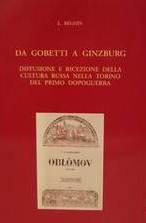
Laurent Béghin: Da Gobetti a Ginzburg

Béghin, Laurent. Da Gobetti a Ginzburg. Diffusione e ricezione della cultura russa nella Torino del primo dopoguerra. Brussel–Bruxelles–Rome: Historisch Belgisch Instituut te Rome–Institut Historique Belge de Rome–Istituto Storico Belga di Roma, 2007, 508 p. ISBN 90-74461-65-4                                             

Licencié en philologie romane et en histoire et philologie orientales de l’UCL, Laurent Béghin vient de publier un ouvrage impressionnant en italien, dans lequel il combine son intérêt pour le monde slave, pour l’histoire des idées au vingtième siècle et pour la littérature italienne.

Comme l’indique le sous-titre, le présent ouvrage–édité par l’Institut Historique Belge de Rome–propose un tour d’horizon de la diffusion et de la réception de la « culture russe » dans la capitale piémontaise pendant « l’après-guerre ». Il faut préciser que lors de la lecture de Da Gobetti a Ginzburg, la notion « culture » de Béghin s’avère essentiellement littéraire. Dans ce sens, le sous-titre Diffusione e ricezione della cultura russa nella Torino del primo dopoguerraest peut-être trop prometteur. Par ailleurs, Béghin semble comprendre « l’après-guerre » plutôt comme « l’entre-deux-guerres ».

Cet ouvrage volumineux et soigné, ne manquant point d’ambition, est composé de respectivement une introduction, deux parties étendues, un épilogue, une bibliographie et une table alphabétique des noms de personnes mentionnés.

La première partie, La letteratura russa in Italia nella prima metà del novecento, est dédiée à la réception d’œuvres russes dans toute la péninsule italienne pendant la période fin dix-neuvième siècle – Seconde Guerre mondiale. La deuxième partie, La letteratura russa a Torino nel primo dopoguerra, est beaucoup plus développée et traite de la réception de la littérature russe à Turin pendant l’après-guerre.

Dans la première partie de Da Gobetti a Ginzburg, Béghin prête, à juste titre, beaucoup d’attention aux données bibliographiques quantitatives, à l’aide desquelles il s’interroge–fût-ce très prudemment–sur le choix des auteurs et des œuvres russes publiés. En outre, l’auteur tente de tracer la carte institutionnelle de la réception de la littérature russe en Italie; il traite des principaux acteurs qui ont contribué, soit de façon directe, soit de façon indirecte, à l’organisation de cette réception, comme la slavistique universitaire italienne, les maisons d’édition, les revues et les traducteurs.

Parmi ces traducteurs italiens d’œuvres russes, actifs avant la Seconde Guerre Mondiale, il y avait de nombreux russes et slavistes. L’on ne traduisait cependant point du tout par exception du français. Voilà une des raisons pour lesquelles Béghin ne néglige pas de toucher la question de l’intermédiation culturelle française, dont l’impact sur la réception de la littérature russe en Italie restait considérable jusqu’aux années vingt et trente.

A part une étude quantitative et institutionnelle de la réception d’œuvres russes en Italie, la première partie de Da Gobetti a Ginzburg offre aussi un bref chapitre sur le rôle d’obstacle de la censure fasciste dans cette réception. Prenant en considération le contexte mussolinien et la réalité soviétique, l’on comprend pourquoi bon nombre de traducteurs italiens d’œuvres russes étaient considérés–à juste titre ou à tort–comme des dissidents idéologiques au régime.

La deuxième partie de l’ouvrage s’ouvre par une présentation des éléments d’ordre socio- et politico-historique, qui permettent de contextualiser la diffusion et la réception de la littérature russe au Turin de l’après-guerre–appelé « le Pétersbourg italien » par suite de ses expériences révolutionnaires en 1920, profondément inspirées du communisme russe.

Béghin comble ensuite la lacune epistémologique concernant les nombreuses activités liées à la culture russe de l’écrivain, essayiste, éditeur, directeur de revue et traducteur d’Andreev, Kuprin et Čechov, Piero Gobetti (1901-1926). Ce dernier est considéré par l’auteur comme « un personnage-clé dans le processus de diffusion de la littérature russe au Turin de l’entre-deux-guerres » (p. 216).

Plus loin, Béghin traite du séjour turinois (1911-1922) de l’écrivain, homme politique et théoricien marxiste Antonio Gramsci (1891-1937). A Turin l’intellectuel sarde, s’intéressant pour des raisons bien évidentes particulièrement à « la patrie de la révolution communiste », a collaboré en tant que rédacteur avec L’Ordine nuovo, une revue politico-littéraire qui publiait régulièrement des textes littéraires russes en traduction italienne.

Après avoir dédié encore quelques pages au séjour de Gramsci en Russie et à sa détention en Italie, pendant laquelle il étudiait le russe, l’auteur passe au chapitre sur les sociétés d’édition dites « jeunes » et « traditionnelles » turinoises, ayant joué un rôle de premier plan dans la diffusion des auteurs russes dans l’Italie du premier après-guerre. Parmi ces « jeunes » sociétés d’édition, La Slavia, fondée par Alfredo Poliedro et acueillant de nombreux traducteurs–russes, slavistes et intellectuels italiens–occupait une position tout à fait particulière grâce à sa spécialisation et à sa grande professionnalisation dans le domaine des traductions d’œuvres russes.

A part les sociétés d’édition, aussi les périodiques–revues académiques, culturelles, littéraires, politiques, ainsi qu’hebdomadaires de divertissement et journaux–jouaient un rôle non négligeable dans la diffusion d’œuvres russes au Turin de l’après-guerre; Béghin en fournit au lecteur une vision panoramique, qui permet de conclure que l’intérêt turinois pour la littérature russe atteignait son apogée aux années 1929-1931, et qu’il était principalement orienté sur les auteurs de nouvelles courtes et humoristiques, comme Čechov, Averčenko et–fût-ce en moindre mesure–Andreev.

Le dernier chapitre de l’ouvrage porte sur le militant antifasciste et russiste de valeur Leone Ginzburg (1909-1944). Plus particulièrement, l’auteur s’intéresse à sa biographie, ses traductions du russe, ses activités éditoriales et ses écrits critiques sur la littérature russe–d’ailleurs fort influencés par la philosophie esthétique de Benedetto Croce.

Da Gobetti a Ginzburg se clôt par un épilogue peut-être moins pertinent, mais néanmoins intéressant, qui porte sur l’historien turinois Franco Venturi (1914-1994)–considéré par Béghin comme « le meilleur dépositaire et continuateur d’un des courants les plus intéressants de la culture turinoise des années vingt et trente » (p. 448), bien qu’il ne s’intéressât guère à la littérature russe telle quelle–et sur l’écrivain Italo Calvino (1923-1985), qui a fait preuve d’appréciation quant à quelques auteurs russes, comme Babel’ et Fadeev.

L’étude empirique et historique de Béghin, constituant une importante contribution à la connaissance sur la réception–européenne en général et italienne en particulier–de la littérature russe, présente sans aucun doute un grand intérêt pour la slavistique. Il est peut-être opportun de signaler ici que l’auteur respecte systématiquement la translittération scientifique du russe, conformément aux normes généralement admises par les slavisants italiens.

Il faut mentionner que le présent ouvrage est tout à fait accessible aux lecteurs non-spécialisés; Béghin présente les résultats de sa recherche sous forme d’une histoire de faits littéraires et historiques, en adoptant un style agréablement narratif. Da Gobetti a Ginzburg pourra donc utilement servir non pas seulement d’ouvrage de consultation, mais aussi d’ouvrage de lecture.

Ce qui étonnera cependant le lecteur éveillé ayant fût-ce quelque connaissance quant à la traductologie descriptive, c’est que Béghin fait comme si de rien n’était. Systématiquement, il discute les traductions d’une façon essentialiste et normative. Ainsi, il formule des jugements de valeur, plutôt stériles, à propos de leur « qualité philologique » et à propos de la « compétence » des traducteurs. En outre, nulle part Béghin ne renvoie à une théorie traductologique ou à une méthodologie traductologique quelconques. Tout en s’occupant de traductions au long de son ouvrage, l’auteur ne semble même pas sentir le besoin d’expliquer pourquoi au juste il s’oppose aux notions de la branche académique appelée en anglais « Descriptive Translation Studies ».

Manquant d’armes de recherche adéquates, Béghin n’arrive pas à interpréter pleinement les nombreuses données empiriques qu’il présente au lecteur ; comme si, par exemple, le fait qu’avant la Première Guerre mondiale la plupart des traductions italiennes d’œuvres russes étaient traduites du français, est suffisament expliqué en renvoiant à « la diffusion limitée de la langue russe en Italie » (p. 23).

Cette dernière observation est en quelque sorte symptomatique pour tout l’ouvrage ; en général, Da Gobetti a Ginzburg est beaucoup plus informatif qu’interprétatif. Voilà pourquoi les conclusions de Béghin ne vont pas toujours aussi loin que l’on ose espérer. Ceci dit, son travail, privé de spéculations, reste très méritoire.

[Recensie verschenen in Slavica Gandensia 2007, Nr. 34]

Heksenproces tegen Pussy Riot

Op 17 augustus 2012 zijn drie leden van de Russische punkrockband Pussy Riot elk tot 2-jaar strafkamp veroordeeld omdat ze zich op 21 februari 2012 in de Moskouse Christus-de-Redder-Kathedraal tot de Moeder van de Laatsgenoemde hebben gericht met een tot nog toe onverhoorde muzikale smeekbede om Rusland te verlossen van Poetin. Hieronder enkele beelden van de betoging in Brussel tegen dit rechtelijk miskraam. Voor meer informatie over de manieren om deze politieke gevangenen te steunen, zie http://freepussyriot.org.

Deze slideshow vereist JavaScript.

Getagged ,

Маленький (или, по крайней мере, не очень большой) русско-голландский сборник повседневных оборотов речи, инфинитивных конструкций, пословиц и поговорок для чтения между делом и самостоятельного изучения

какая муха тебя укусила: wat heb je? (verbazing, bij vreemd gedrag)

Klik hier om de Russisch-Nederlandse spreekwijzer te downloaden. Кликнуть здесь чтобы скачать русско-голландский сборник.

Предисловие

«Маленький (или, по крайней мере, не очень большой) русско-голландский сборник повседневных оборотов речи, инфинитивных конструкций, пословиц и поговорок для чтения между делом и самостоятельного изучения» составлен летом 2007 г. по просьбе самих лёвенских студентов-славистов. Он представляет собой собрание нескольких сотен словосочетаний, которые чрезвычайно полезны из-за частотности  употребления носителями языка и которые, следовательно, должны присутствовать как в активном, так и в пассивном словарном запасе будущего русиста или вообще студента, продолжающего изучать «великий, могучий, правдивый и свободный русский язык».

Сборник состоит из следующих четырёх частей: 1. Повседневные обороты речи (сс. 6-21); 2. Полезные инфинитивные конструкции (сс. 21-51); 3. Общеупотребительные определения и наречия (сс. 51-55); 4. Пословицы и поговорки (сс. 55-57).

Выбор голландских словосочетаний в значительной степени основан на польско-голландском списке фразеологизмов и выражений («Polsko-niderlandzka lista frazeologizmów i wyrażeń») проф. д-ра Криса Ван Хёкелома. Большинство русских словосочетаний взяты из «Большого голландско-русского словаря» (Аmsterdam 2000) проф. д-ра А. Х. ван ден Баара. Практически все пословицы и поговорки четвёртой части собраны в книге «Фразеологизмы русского языка» (Екатеринбург 1999). Все карикатуры вышли из-под пера Андрея Бильжо (см. http://www.petrovich.ru).

Ударные гласные словосочетаний в русском языке подчёркнуты. Инфинитивы русских глаголов даются чаще всего в совершенном виде, иначе добавлено курсивом «if». Пословицы и поговорки четвёртой части сопровождены голландским эквивалентом, буквальным переводом или, в случае необходимости для их понимания, описанием ситуации, в которой пословица или поговорка чаще всего используется.

Хотя главное намерение сборника состоит в расширении коммуникативных навыков читателя в повседневной ситуации, русский матерный язык в принципе в него не входит. Кроме словосочетаний литературного языка, в сборник вошли словосочетания из сферы книжного (книжн.), официального (оф.), разговорного (разг.), фамильярного (фам.), фамильярно-грубоватого, или сниженного (сниж.), грубого (гр.) и иронического (ирон.) языков.

Благодарю проф. д-ра Татьяну Солдатенкову за eё доброжелательную помощь, проф. д.-ра Эммануэля Вагеманса, Нину Игошину, Татьяну Иевлеву, Бенямина Де Месела и Ксению Соловых за их ценные рекомендации. Буду чрезвычайно благодарен за всевозможные отклики и предложения читателей по следующему изданию данного сборника, присланные мне по электронной почте (pieter.boulogne@arts.kuleuven.be).

Выбор карманного размера настоящего сборника не случаен; сборник предназначен для того, чтобы читатель брал его с собой куда угодно. Пусть читает этот словарь между делом: в поезде, в зале ожидания психотерапевта, в гостях у дяди Вани, в уборной, на сон грядущий и т.п. Помните, что только повторение – мать учения!

Питер Булонь

Vladimir Nabokov: Dostojevski

Тоску́я в ми́ре, как в аду́,
уро́длив, су́дорожно-све́тел,
в своëм проро́ческом бреду́
он век наш бе́дственный наме́тил.

Услы́ша вопль его́ ночно́й,
поду́мал Бог: уже́ль возмо́жно,
что все дaро́ванное Мной
так стра́шно бы́ло бы и сло́жно?

Op aarde klagend als in de hel
was het met monsterachtigheid
dat hij in zijn profetische ge-ijl
de gesel beschreef van onze tijd.

Zijn nachtschreeuw zette God aan het denken:
‘Is het misschien dan toch echt waar
dat die van Mij afkomstige geschenken
zo vreselijk kunnen zijn en zwaar?’

Vertaling © 2012 Pieter Boulogne. Oorspronkelijke titel: “Достоевский” (1919)

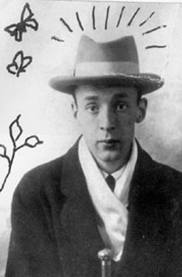
Vladimir Vladimirovitsj Nabokov (1899-1977), erelid van de door Karel van het Reve opgerichte anti-Dostojevskiclub

Getagged , , , , ,

Vertalingen van Poesjkin

Aleksandr Poesjkin (1799-1837)

Deze website bevat de volgende in het Nederlands vertaalde gedichten van Poesjkin, die niet volledig ten onrechte door de Russen wordt beschouwd als met voorsprong de meest getalenteerde dichter die het heelal op het einde der tijden gekend zal hebben:

Getagged , , , , , , , ,

Over Karel van het Reve

Van het Reve met zijn uitgever Van Oorschot (links) in 1982. De foto is misleidend: iedere dag belandde er minstens één communist tussen zijn boterhammen.

Over Karel van het Reve (1921-1999), de slavist die zichzelf onsterfelijk heeft gemaakt met in hoge mate leesbare essays over Russische literatuur (en honderdenéén andere zaken), zijn op deze website de volgende bijdragen te vinden:

Van het Reve’s Verzameld werk in 7 delen, tussen 2009 en 2012 uitgegeven bij Van Oorschot.

Getagged , , , , ,

Giuseppe Sarti nella Russia settecentesca. Un compositore faentino alla ricerca di fama e fortuna

Introduzione

Com’è il caso di tanti compositori del Settecento, Giuseppe Sarti (1727, Faenza – 1802, Berlino), la cui fama nella sua vita non era da meno di quella di Mozart, gode oggi di poca notorietà. Un secolo dopo la morte del compositore, Max Arend costatò: “Giuseppe Sarti: er ist vergessen” (Arend 1902:113). Una delle ragioni era l’ampia dispersione delle fonti – una conseguenza diretta della carriera nomade del compositore.

Il più delle volte ci si ricorda ancora di Sarti come l’autore dell’opera Fra i due litiganti il terzo gode, di cui Mozart riprese l’aria Come un agnello nella sua opera Don Giovanni.

Negli ultimi decenni si nota però un’attenzione rinnovata per Sarti; non soltanto per i suoi componimenti, ma pure per i suoi meriti di pedagogo e scienziato. Così nel 1983, un convegno internazionale a Faenza era dedicato a Sarti.[1] In quella occasione si capì una volta di più che, nonostante gli sforzi già compiuti, le idee su questo compositore non erano chiare, soprattutto sul suo periodo russo (1784-1802).[2]

Dopo il crollo dell’Unione Sovietica, gli archivi russi, dove si conservano molti documenti su Sarti, sono stati aperti ai ricercatori occidentali, anche se debbono superare ostacoli burocratici e linguistici per poter lavorare in questi archivi. Nonostante questo, qualche malinteso sul periodo russo di Sarti continua a circolare.

In quest’articolo cerco, fra l’altro basandomi sui materiali presenti negli archivi russi, di dare una documentazione attendibile delle attività di Giuseppe Sarti in Russia, facendo particolare attenzione al suo contributo alla cultura musicale russa, come compositore, pedagogo e scienziato.

La musica italiana in voga nella Russia settecentesca

Nel corso del Settecento, gli zar russi si interessano sempre più alla musica italiana.[3] È Pietro il Grande (1682-1725) che aprì la strada. Con lui la Russia guardò all’Europa, limitò il potere della Chiesa russa ortodossa, la cui censura non lasciava spazio al rinnovamento, ad esperimenti o a influssi dall’estero.

Sotto Anna I (1730-1740) il gusto prussiano fece posto ad un gusto più raffinato; quello francese-italiano. Invitò il compositore Francesco Araja di Firenze. In quel periodo vari virtuosi italiani, cantanti e musicanti al seguito di Araja, divennero famosi tra la nobiltà russa.

È invece Caterina II (1762-1796), che diede un posto di primissimo piano alla musica italiana presso la sua corte imperiale. Capì quanto il reclutare musicisti e compositori celebri europei potesse contribuire al prestigio della sua corte, ed era disposta a sostenere per questo costi consistenti.

Uno dei primi compositori attirato dalla corte di Caterina II, era il ceco Statzer, a cui seguì l’italiano Manfredini, che si portò dietro vari cantanti già famosi. Fu nominato compositore di corte dal 1755 fino al 1768. Pure Galuppi lavorò alla corte imperiale di Caterina II, sostituito nel 1768 nella funzione di direttore della cappella canora da Traetti, che ebbe a sua volta Paisiello come successore. Nel 1784, dopo un litigio con la direzione dei Teatri Imperiali[4], Paisiello fu sostituito da Sarti.

È proprio Sarti, che concluse la tradizione italiana iniziata da Araja e che segna il principio di un nuovo periodo; dopo Sarti la musica cortigiana russa si rivolge definitivamente alla ricerca di uno stile nazionale più originale.

Reclutato da Caterina II

Nel 1784 Paisiello era, almeno ufficialmente, sempre al servizio della corte imperiale russa in quanto maestro di cappella. Il suo contratto andava fino al 1786, sebbene fosse tornato a Napoli, ufficialmente per un anno di vacanze. L’imperatrice e Paisiello capivano però entrambi che il conflitto con la direzione della Cappella di corte rendeva indesiderato un suo eventuale ritorno. È proprio per questo che il compositore firmò un contratto con la Corte di Napoli. L’imperatrice ordinò allora ai Teatri Imperiali di cercare un successore degno.

Vari musici furono presi in considerazione e alla fine si preferì Sarti, che esercitava in quel momento la professione di maestro di cappella del Duomo di Milano. Godeva in Europa di una gran notorietà per alcune sue composizioni, come l’opera buffa Le gelosie villane, che nel 1779 era stata rappresentata a San Pietroburgo. La scelta per Sarti fu forse anche sostenuta dal principe ereditario Paulo Petrovič, che nel 1782 a Parma aveva assistito ad una rappresentazione dell’opera di Sarti Alessandro e Timoteo (The New Grove Dictionary of Opera and Musicians 2001:299).

Il 16 maggio 1784 (calendario gregoriano), Sarti lasciò Milano e, accompagnato da sua moglie e dalle sue figlie, si mise in viaggio per San Pietroburgo, passando da Mantova, Venezia e Vienna. A Vienna si fermò qualche giorno per poter incontrare Giuseppe II d’Asburgo, Haydn e Mozart.

Giuseppe II, che Sarti aveva conosciuto a Milano, era lui stesso un compositore dilettante ed amava ergersi a mecenate degli artisti. Si mostrò specialmente accogliente e generoso nei confronti del compositore italiano, in onore del quale l’imperatore fece rappresentare l’opera Fra i due litiganti, il terzo gode. La mattina dopo gli diede l’incasso, dicendo: “L’empereur  ayant déjà tant gagné avec cet opéra, il est juste que l’auteur jouisse du fruit de l’une des représentations” (Pasolini-Zanelli 1863:70).

Anche l’incontro con Haydn fu molto cordiale. Sarti lo visitò quando questi dirigeva l’orchestra durante la rappresentazione della sua opera Armida. Verso il secondo atto Sarti avrebbe entusiasticamente scavalcato le transenne, gridando “Chi ti abbraccia è il Sarti, il Sarti, che voleva vedere il sommo Haydn, ammirarne i grandi lavori, ma che non sperava di udirne uno tanto sublime” (Pasolini-Zanelli 1863:73). Haydn, da parte sua, avrebbe gridato al principe Esterhazy, che assisteva all’avvenimento e che era spaventato: “è il Giulio Sabino, è l’autore di quella musica superba, è il Sarti stesso venuto qui a vedere l’amico suo Giuseppe” (Pasolini-Zanelli 1863:73-74).

Sarti incontrò pure Mozart, che era sempre desideroso d’incontrare compositori famosi di passaggio a Vienna. Su questo incontro si conserva una lettera di Mozart a suo padre. Mozart scrive: “Sarti ist ein rechtschaffener, braver Mann! […] ich habe ihm sehr viel gespielt, endlich auch Variationen auf eine seinige Aria gemacht, woran er sehr viele Freude gehabt hat” (Abert 1975:42). Dunque Mozart era bendisposto verso Sarti, ma non fu ricambiato da quest’ultimo. Anzi, quando Mozart compose nel 1787 i suoi sei quartetti dedicati a Haydn, Sarti reagì con il suo Esame acustico fatto sopra dei frammenti di Mozart.[5] In questo trattato velenoso, Sarti si lamenta, forse spinto dalla gelosia, che barbari senza orecchio si siano compiaciuti di comporre e conclude la sua critica con le parole di Rousseau: “de la musique pour faire boucher des oreilles” (Mooser 1951:743).

All’inizio di giugno, Sarti lascia Vienna e raggiunse San Pietroburgo, passando probabilmente per Varsavia.

Alla corte dell’imperatrice (1784-1786)

Sarti fu accolto alla corte di Caterina II con tutti gli onori e dopo poco tempo fu incaricato di dirigere la compagnia italiana e di comporre nuove opere. Per il resto ci si aspettava da lui una partecipazione attiva, come musicante, agli spettacoli.

Il pubblico pietroburghese in generale e la corte di Caterina II in particolare, mostrarono una gran benevolenza nei confronti del compositore. Sarti ebbe accesso in alcuni circoli artistici, come quello di N. A. L’vov.[6]

Nell’autunno 1784 fu rappresentata Gli amanti consolati. Su richiesta dell’imperatrice, Sarti riscrisse quest’opera buffa per il teatro pietroburghese. Si deve menzionare, che Caterina II non soffriva prolissità sulla scena e per questo aveva decretato nel 1777 che nel Teatro della corte non voleva essere trattenuta più di novanta minuti. Da allora, le opere italiane, per lo più composte di tre atti, furono ridotte a due.

Gli amanti consolati conobbe un’accoglienza entusiasta fra gli spettatori di San Pietroburgo, tra i quali il famoso Grigorij Potëmkin, comandante in campo, protetto dell’imperatrice e mecenate di tanti musicisti ed artisti. Il principe Potëmkin era un gran conoscitore di musica – al contrario di Caterina II, che non aveva un orecchio musicale – ed egli teneva all’epoca una propria cappella canora. Potëmkin divenne amico di Sarti ed ebbe in seguito un ruolo cruciale nella sua carriera russa come patrocinatore.

Nel 1785 la compagnia italiana, della quale Sarti assumeva la guida, cambiò in modo importante. Su raccomandazione del compositore, il soprano Marchesi, che era famoso per il suo stile di canto barocco, fu scritturato. Con ciò Sarti sperava di mettere in ombra la cantante portoghese Luisa-Rosa Todi, con la quale rivaleggiava per ottenere i favori dell’imperatrice, ma questo si dimostrò un grave errore di calcolo.

Verso il carnevale del 1785 Sarti mise in scena nel teatro dell’Ermitage l’opera Idalida[7], composta prima. Il ruolo di protagonista fu interpretato da Luisa-Rosa Todi. Nello stesso anno furono presentate al pubblico pietroburghese, anche le opere popolari Le gelosie villane e Fra i due litiganti.

Nel 1785 Sarti decise, per la prima volta in Russia, di creare una composizione totalmente nuova ed impressionante. Per questo, rafforzò l’orchestra tradizionale con corni russi, il che significò un’innovazione radicale nella tradizione italiana. Il procedimento di aggiungere corni a un’orchestra non fu inventato da Sarti, ma era stato introdotto prima da Maresch, un artista che nel 1774 era entrato al servizio della corte imperiale di San Pietroburgo. Nel 1775, sotto la sua direzione, fu realizzato un esperimento nel padiglione di caccia di Izmajlov, nei pressi di Mosca. Trentasette servi, armati con corni di diverse dimensioni, furono disposti su alcune linee. Insieme, i corni suonavano come un organo.[8]

I cacciatori russi conoscevano già da lungo tempo una tradizione di musica di corni. Sino ad alcuni anni prima dell’arrivo di Sarti a San Pietroburgo, era molto usuale che i nobili russi finanziassero un’orchestra di corni. Gli esecutori erano quasi sempre servi che rispettavano la disciplina musicale sotto la minaccia della mazza.

La prima composizione di Sarti per un’orchestra con corni è un oratorio russo ortodosso che porta il titolo Gospodi vozzvach k tebe. Un secondo oratorio è intitolato Pomiluj mja bože.[9] Entrambi gli oratori furono composti su ordinazione di Potëmkin e furono eseguiti nell’aprile del 1785 nel suo palazzo.

L’innovazione di Sarti ebbe successo: i corni, ai quali la partitura dava il ruolo dell’organo, impressionarono il pubblico. Più tardi, Sarti riutilizzerà varie volte questo procedimento. Pure l’imperatrice, presente alla rappresentazione di Gospodi vozzvach k tebe, ne fu entusiasta.

Nell’ottobre del 1785 nel Kamennyj Teatr fu messa in scena per la prima volta l’opera buffa di Sarti I finti eredi.[10] Per questa composizione Sarti aveva utilizzato il libretto Il villano geloso di Bertrati. Per la rappresentazione di quest’opera il compositore poteva contare su cantanti e musicisti virtuosi, il che spiega la complessità dei frammenti polifonici e delle parti da solista. L’incasso fu dato integralmente al compositore, che secondo il suo contratto con i Teatri Imperiali aveva annualmente diritto al ricavato di una rappresentazione. Lo stesso giorno l’orchestra di Potëmkin suonò una sinfonia, a beneficio di Sarti.

Nel febbraio del 1786, la direzione dei Teatri Imperiali fu assegnata, su ordine di Caterina II, ad un solo direttore nella persona di Stepan Strelakov. Facendo questa nomina e realizzando una riforma dei Teatri Imperiali sul modello occidentale, l’imperatrice sperava, invano, di dare una soluzione all’indebitamento dal quale i Teatri erano sommersi. Le rappresentazioni costavano molto e fruttavano poco, soprattutto perché gli spettatori pietroburghesi si accalcavano per assistere a rappresentazioni gratuite, mentre i primi palchetti dei grandi teatri rimanevano vuoti quando bisognava pagare un biglietto. Di conseguenza, i musicisti erano spesso pagati in ritardo o troppo poco, a danno dell’ordine e della disciplina. Conviene segnalare che Sarti stesso, in quanto musicista straniero, godeva di un trattamento preferenziale.

Sotto la direzione di Strelakov, i debiti aumentarono da 204.000 sino a 440.900 rubli. La stessa imperatrice dovette ammettere che la nomina di Strelakov era stata un errore. Secondo il segretario imperiale Chrapovickij, essendosi Strelakov dato malato e ubriandosi ogni giorno, l’imperatrice su tutte le furie avrebbe gridato: «C’est un paresseux! » (Mooser 1951:435).

Un’altra causa dei problemi finanziari dei Teatri Imperiali era la costruzione di un teatro nella continuazione dell’Ermitage. Il nuovo teatro era stato disegnato dall’architetto italiano G. Quarenghi ed era destinato alle rappresentazioni più importanti della corte. Nel 1786 la costruzione era terminata. La sala, che aveva la forma di un anfiteatro in un mezzo cerchio, fu inaugurata con una nuova opera seria di Sarti: Armida e Rinaldo.[11] Il ruolo d’Armida fu interpretato da Todi e quello di Rinaldo da Marchesi, il protetto di Sarti. Il coro era composto di cantanti della cappella cortigiana, che in questa occasione non ricevettero che dieci rubli a persona, mentre i solisti maschi e femmine furono pagati rispettivamente con una cassetta costosa e con un gioiello. L’imperatrice, a cui la rappresentazione era piaciuta molto, diede a Sarti 1.200 rubli.[12]

Nello stesso anno, Armida e Rinaldo fu ripresa a San Pietroburgo ancora quattro volte, di cui due come rappresentazione di beneficenza per Sarti e Marchesi. Spicca, che nel suo ukase l’imperatrice sottolineasse che queste rappresentazioni potevano essere eseguite soltanto dopo la rappresentazione di beneficenza a vantaggio della Todi (Pogožev 1892:305). Con questo, Caterina II volle senza dubbio fare una cortesia alla Todi, che era invidiosa di Marchesi e che non intendeva rimanere nella sua ombra. Questo non bastò ad accontentare la cantante, che giunse fino al punto di parlare all’imperatrice di Sarti come di “un méprisable intrigant” (Mooser 1951:436). Caterina II, pur essendo sempre stata soddisfatta dalle prestazioni di Sarti, cedé infine alla Todi e ordinò ai Teatri Imperiali di non rinnovare il contratto con Sarti, il che significava il suo licenziamento. Il compositore, che aveva lasciato appena due anni prima la sua terra natale per la Russia nella speranza di una brillante carriera, fu informato di questa decisione il 12 luglio del 1786 (Pogožev 1892:48). Proprio come Paisiello, aveva avuto la peggio nella lotta per godere del favore dell’imperatrice.

Nell’estate del 1786 Sarti compose, per il ventiquattresimo anniversario dell’incoronazione, l’opera seria Castore e Polluce.[13] Sapeva, che poco dopo avrebbe dovuto lasciare la corte imperiale, e per questo fece del proprio meglio per lasciare un’ottima impressione nella memoria dell’imperatrice. Il libretto fu scritto da Moretti, il nuovo librettista di corte.

La rappresentazione stessa, il 24 settembre del 1786[14], fu un successo. L’imperatrice scrisse, in una lettera al barone Grimm: «Castor et Pollux est un superbe spectacle; la Todi et Marchesini enchantent à faire tomber en pamoison les amateurs et les connaisseurs; pour les faiseurs de comédies, un opéra est un peu dur à la digestion.»[15] In questa lettera, l’imperatrice, che intendeva evidentemente se stessa con “les faiseurs de comédies”, non fece parola della musica stessa o del compositore.

Dopo Castore e Polluce, la collaborazione fra la Todi e Sarti finì definitivamente. Il 31 dicembre del 1786 scadeva il contratto con i Teatri Imperiali e poco dopo Sarti lasciò la capitale, sostituito nella funzione di maestro di cappella da Cimarosa.

Al servizio di Potëmkin (1786-1791)

Dopo il suo licenziamento, Sarti, avendo perso prestigio, non tornò in Italia o nell’Europa centrale, cosa comprensibile se si considera che non godeva più del favore dell’imperatrice. Fu preso sotto la protezione di Potëmkin, che era già da molto tempo convinto del talento del compositore, e che provava per lui simpatia.

Sarti andò, in circostanze poco chiare, al servizio di Potëmkin. Scarse erano le possibilità che Caterina II avesse preso a male l’atto del principe, dato che non aveva mai avuto problemi personali con Sarti ed era sempre stata contenta delle sue creazioni. La sola sua intenzione era stata di accontentare la Todi. Inoltre, Potëmkin era in quel momento uno dei più potenti statisti e poteva contare su tutta la fiducia dell’imperatrice, con cui aveva avuto una storia d’amore. È probabile che il principe avesse parlato con l’imperatrice dell’assunzione di Sarti, e che lei avesse dato la propria approvazione.

Quando la guerra fra i Turchi e la Russia ricominciò nella primavera del 1787, Potëmkin, che per la cacciata dei Turchi dalla Crimea, era stato decorato dall’imperatrice con il titolo “Principe di Tauride”, ripartì in qualità di generalissimo alle province meridionali della Russia.

Oltre ad essere un appassionato delle guerre, Potëmkin lo era pure delle arti, e non voleva privarsene durante le sue campagne militari. Per questo, nel suo seguito vi era un entourage di musicanti, cantanti, attori e ballerini. Loro compito era di divertire il principe ed i suoi ospiti. Sarti ricevette la direzione dei musicisti e fu nominato maestro della cappella personale del principe. In tal modo, il principe ed il compositore si resero un servizio reciproco: Potëmkin salvò la carriera russa di Sarti, che in cambio soddisfece i fabbisogni musicali del principe in un ambiente militare.

Sarti restò cinque anni presso il principe, e durante questo periodo compose vari pezzi musicali, destinati o al divertimento del principe ed i suoi ospiti, o alla celebrazione di successi militari. Alcune di queste opere, composte su ordinazione di Potëmkin, sono note ancora oggi.[16]

Potëmkin voleva fare più che proteggere artisti ed organizzare concerti; voleva porre nelle province meridionali le basi di una nuova fonte per lo sviluppo della musica. Concepì il piano di fondare nelle province meridionali un’accademia di musica. Originariamente, il principe voleva fondare l’accademia nella nuova città Voznesenk, poi a Kremenčug, ma alla fine preferì Ekaterinoslav.[17]

Le impalcature d’Ekaterinoslav stessa, la città che Potëmkin aveva destinato a funzionare come centro amministrativo e culturale delle province meridionali, non erano state ancora tolte nel 1787. Un anno prima, Potëmkin aveva domandato all’imperatrice più mezzi finanziari per varie edificazioni, fra cui un’università con un’accademia di musica o un conservatorio. I soldi erano stati effettivamente assegnati, con la protesta silenziosa dei nemici del principe, che stimavano che lui sprecasse troppi soldi per le province meridionali.

Già nel 1785, Potëmkin aveva cercato un musicista che potesse dirigere l’accademia. La scelta cadde su Ivan Chandoškin[18], un violista virtuoso e il primo compositore russo di musica strumentale,  che a quel momento ancora era al servizio della corte imperiale. Il principe domandò all’imperatrice di far trasferire Chandoškin nel sud. Caterina II acconsentì e nel marzo del 1787 Chandoškin fu nominato ufficialmente direttore dell’accademia di musica d’Ekaterinoslav. Poco dopo, Potëmkin nominò, almeno formalmente, sette musicisti della propria compagnia come insegnanti dell’accademia. In quanto musicisti stranieri erano ovviamente ben pagati.

Nel 1787 Chandoškin fu sostituito nella sua funzione di direttore da Sarti, che per questo ricevette uno stipendio di non meno di 3.500 rubli (Stepanov 1984:132). La scelta per Sarti era di certo legittima, visto che aveva già prima avuto la direzione di un conservatorio musicale a Venezia. Sarti non voleva soltanto denaro; domandò al principe un villaggio con servi ed un titolo militare.[19] Entrambi le richieste furono accolte. Il compositore divenne proprietario del paesino Sofia e dei suoi abitanti, che valevano insieme 10.000 rubli.[20] Inoltre fu nominato primo tenente dell’armata imperiale (Pasolini-Zanelli 1863:82) – all’epoca in Russia era consuetudine ricompensare le funzioni civili con titoli militari.

Sulle attività dell’accademia d’Ekaterinoslav non si sa molto. Ci sono ragioni legittime per presumere che quest’accademia esistesse soltanto sulla carta e nella fantasia di Potëmkin. Nel 1791 l’accademia avrebbe in ogni caso funzionato difficilmente, visto che in quell’anno una gran parte dei collaboratori e musicisti partirono per San Pietroburgo. Un argomento più convincente è dato da Mooser, che ha trovato un ukase scritto dall’imperatrice non prima del 1792 ed in cui ordina di pagare Sarti “jusqu’au moment où l’Académie d’Ekaterinoslav sera fondée” (Mooser 1951:471). Questo significa che otto anni dopo la fondazione formale, l’accademia ancora non funzionava. È possibile che a Sarti ed ai suoi colleghi-insegnanti fosse dato uno stipendio, senza che loro avessero reso molto. Esiste però pure la possibilità, che Sarti insegnasse ad alcuni studenti non a Ekaterinoslav, bensì a Kremenčug. Qualunque sia la verità, Potëmkin riuscì, per lo meno nei pensieri a creare l’accademia d’Ekaterinoslav. La legenda di quest’accademia oltrepassò le frontiere del tempo e della Russia. Così menzionano numerose fonti russe ed occidentali, anche oggi, senza esprimere il minimo dubbio, che l’accademia di musica d’Ekaterinoslav funzionasse realmente.[21] Soltanto nel 1796, sotto Paulo I, l’accademia, che alcuni trovano degna d’esser chiamata “un villaggio Potëmkin”, sarebbe sciolta formalmente (Fesečko 1972:70).  Per nove anni Sarti riceverebbe dunque uno stipendio da direttore.

Come già detto, le attività di Potëmkin nelle province meridionali costavano molti soldi, tutti provenienti dall’imperatrice. A San Pietroburgo numerosi erano coloro che sostenevano che il principe governasse male la regione affidatagli, e che persino la conquista della Crimea non giustificasse i costi astronomici. Secondo alcuni storici è proprio per questo che Caterina II concepì il piano di andare ad ispezionare personalmente le province meridionali. È però altrettanto possibile che fosse stato Potëmkin stesso a prendere l’iniziativa d’invitare l’imperatrice (Brikner 1891:80). I piani per un viaggio di questo genere esistevano già nel 1784, ma l’imperatrice compì “il suo viaggio taurico” non prima del 1787. Potëmkin ebbe dunque abbastanza tempo per fare i preparativi necessari e non lasciare nulla al caso. Era intenzionato a sconfiggere i suoi nemici della capitale, trasformando la visita di controllo dell’imperatrice in una festa. Con largo anticipo fece costruire varie corti e case per ospitare l’entourage imperiale, aumentò le edificazioni ad Ekaterinoslav, e ordinò la costruzione di una flotta di galee, con le quali Caterina II avrebbe viaggiato sulla Dnepr’ da Kiev sino a Cherson. Ordinando nuove costruzioni, cercò inoltre di dare il carattere di una capitale a Kremenčug. Potëmkin, eccellente organizzatore, prese pure i provvedimenti necessari affinché vari gruppi etnici venissero incontro all’imperatrice salutandola entusiasticamente.

Durante il viaggio taurico dell’Imperatrice, Sarti ebbe un ruolo da non sottovalutare. Aveva la direzione di quasi tutte le attività musicali. Caterina II, contando a ragione sul principe per il suo divertimento, aveva lasciato le compagnie teatrali e musicali imperiali nella capitale.

L’imperatrice arrivò prima a Kiev, dove svernò con la sua corte. Settimanalmente si davano grandi balli e concerti.[22] Quando il ghiaccio nella Dnjepr’ si sciolse, le galee imperiali navigarono fino a Kremenčug. La galea dell’imperatrice era provvista sulla coperta di un’orchestra, della quale Sarti era dirigente (Montefiore 2000:363).  A Kremenčug durante una cena, Caterina II fu intrattenuta con una cantata italiana che Sarti aveva composto per l’occasione. L’imperatrice fu soddisfatta del modo in cui era stata ricevuta a Kremenčug e lo faceva sapere dappertutto. In una lettera a Saltykov sottolineò che tutti coloro che volevano convincersi che la fiducia dell’imperatrice in Potëmkin fosse ben riposta, dovevano venire a Kremenčug (Brikner, 1891:92).  Da qui l’imperatrice si recò a Cherson, dove incontrò l’imperatore Giuseppe II. Sarti ebbe l’opportunità di fare una forte impressione del suo talento su due imperatori. In occasione di quest’incontro storico, il compositore fece rappresentare dai corni di Potëmkin una Fuga a otto voci. L’imperatore Giuseppe II ne restò piacevolmente sorpreso con soddisfazione di Caterina (Hinrichs 1796:16).  Dopo il soggiorno a Cherson, l’imperatrice passò qualche giorno ai campi militari di Očakov, Jassy e Bender. Riconoscente per il modo in cui Sarti aveva contribuito al suo divertimento e al prestigio del suo impero, lei gli fece il dono di un anello prezioso.[23] Da quel momento, il compositore poteva di nuovo contare sulla simpatia dell’imperatrice.

Dopo la fine del viaggio taurico, Sarti restò nelle province meridionali al servizio del principe. Nel 1788 lì istruiva Danila Kašin, un musicista giovanissimo che era stato liberato dalla servitù (Muzykal’nyj Peterburg 1999:83). Durante il prosieguo della guerra contro i Turchi, Sarti fu trasferito, insieme con gli altri musisti, a Dubossary, il quartiere generale di Potëmkin. Sarti vi organizzava, malgrado le perdite pesanti da parte delle truppe russe, regolarmente rappresentazioni musicali (Dolgorukij 1889:512). Quando nel dicembre del 1788 la roccaforte turca di Očakov cadde nelle mani di Potëmkin, il che era d’altronde previsto da molto tempo, Sarti fece eseguire un nuovo oratorio sul campo militare di Jassy (Kušenov-Dmitrievskij, 1831:109): Tebe boga chvalim.[24] La particolarità di quest’inno su testo antico slavo ecclesiastico consisteva nell’uso di una decina di cannoni, che interpretavano il ruolo di timpani giganteschi e che suonavano durante i due momenti culminanti. Nella rappresentazione di questa sua composizione, Sarti aveva la direzione di una gran quantità di cantanti, musisti e cannonieri. Il pubblico, che non aveva mai visto prima una rappresentazione simile, ne rimase entusiasta (Keldyš 1965:95). Dopo, la rappresentazione fu ripeta a Kremenčug. Il principe era tanto soddisfatto, che inviò la partitura di Tebe boga chvalim all’imperatrice nella capitale, che lo fece eseguire, sostituendo i cannoni con strumenti da percussione, durante un pasto in un convento – il che era in contrasto con le regole ecclesiastiche (Stepanov 1984:133).

Sarti aveva riconquistato le simpatie di Caterina II, come risulta anche dal fatto che nel dicembre del 1789[25] l’imperatrice per intermediazione di Potëmkin ordinò a Sarti di comporre musica per la sua opera storica Načal’noe upravlenie Olega.[26] Originariamente tutta la musica era stata già composta da Cannobbio, Paškevič e Cimarosa, ma l’imperatrice non era soddisfatta.[27] La pièce megalomane – più di mille artisti, cantanti, musicanti e figuranti ci partecipavano[28] – segnava più o meno l’apoteosi delle sue scritture e Caterina II non intendeva accontentarsi con la mediocrità. Finalmente gli si offriva la possibilità di lavorare su incarico dell’imperatrice. Benché fosse occupato di altre composizioni, si mise immediatamente al lavoro. Sarti dovette risolvere la difficoltà di provvedere di musica cori di Lomonosov e frammenti della pièce Alcestis d’Euripide, integrati dall’imperatrice nella sua opera. Dopo la rappresentazione di Načal’noe upravlenie Olega, i cori composti da Sarti divennero famosi in Russia, soprattutto il secondo coro, Carej i carstv zemnych otrada, che risuonò a lungo a San Pietroburgo, spesso sotto il titolo Russkij chor. Secondo l’enciclopedia Muzykal’nyj Peterburg (1999:84), proprio questo coro divenne in un certo senso un modello del passaggio nei canti russi solenni dal Settecento all’Ottocento.

In allegato alla partitura della musica di Oleg, Sarti aggiunse il trattato Eclairissements sur la musique composée pour Oleg.[29] Da questo testo risulta chiaro che il compositore aveva provato d’imitare nelle sue composizioni la tragedia greca antica. Esistono sospetti che scrivendo il trattato, che contiene riferimenti a Aristotele, Euripide e Sofocle, Sarti fosse aiutato da L’vov, che tradusse il testo in russo. Per Oleg, Sarti scrisse le seguenti parole patetiche: « Je souhaite que mon ouvrage plaise à la grande souveraine pour laquelle je sacrifierais ma vie elle-même, si ce sacrifice pouvait être utile. » (Mooser 1951:554). Il suo duro lavoro e le sue parole dolci furono ben remunerati: l’imperatrice, che trovava i cori di Sarti “les plus beaux du monde”[30], gli diede tremila quattrocento rubli nel novembre del 1790[31] e dopo ancora mille červoncy ed un oggetto prezioso (Ivanov-Boreckij 1935:202). L’entusiasmo imperiale non era del tutto condiviso dal pubblico. Il conte Valentin Esterhazy scrisse: «Sarti a tellement imité tous les modes grecs, que c’est fort triste et passablement ennuyeux» (Mooser, 1951:558).

Durante l’estate del 1790, Sarti si trova ancora al servizio del principe nel campo militare di Bender, dove si davano, quasi ogni giorno concerti. In seguito, Sarti scriverà alla sorella in Italia, falsando un po’ la verità, che era “alla guerra contro i Turchi” (cf. Pasolini-Zanelli 1863:100). Il contributo militare di Sarti si limitava al divertimento musicale del principe e dei suoi ospiti.

Nel 1790 Sarti compose la cantata militare Giove, la Gloria e Marte, che fece eseguire da due orchestre, corni, un coro a quattro voci, batterie e, di nuovo, cannoni. Nello stesso anno Sarti scrisse pure la musica di un nuovo oratorio russo: Te Deum. Questo pezzo fu rappresentato nel campo a Bender in occasione della presa della roccaforte di Kilia.

La guerra contro i Turchi era finita e Potëmkin poté tornare nel 1791 a San Pietroburgo, dove voleva celebrare il suo trionfo alla presenza dell’imperatrice. Sarti aveva lasciato prima il sud, ma si fermò a Mosca, dove organizzò in febbraio e marzo grandi concerti. Forse Sarti fu a Mosca per un certo periodo al servizio del conte Šeremetev (Dynnik 1933:56). Il compositore era suo ospite e gli dedicò l’opera Il trionfo d’Atlanta, composta in questo stesso periodo insieme ad una piccola cantata con il titolo rimante Bud’ zdrav, bud’ zdrav, ljubeznyj graf!, quasi sicuramente rivolta allo stesso conte.

Nell’ottobre del 1791, durante il viaggio di ritorno alle province meridionali, Potëmkin morì. Così terminò definitivamente l’alleanza fra il principe ed il compositore. L’imperatrice, che dalla partenza di Cimarosa nel giugno 1791, non aveva un maestro di cappella, fece capire a Sarti che era di nuovo il benvenuto sulla scena pietroburghese. Nello stesso autunno Sarti partì da Mosca per la capitale.

Un’altra volta presso la corte di Caterina II (1791-1796)     

Arrivato a San Pietroburgo, Sarti non indugiò nel presentare le sue richieste. Prima di tutto chiese all’imperatrice la somma “mostruosa” di 15.000 rubli, per ricompensare le sue attività come direttore della dubbiosa accademia di musica d’Ekaterinoslav (Mooser 1951:585). Caterina II, ancora in lutto per la scomparsa del suo amico Potëmkin, gli concesse questa somma senza obiezioni.

Nel gennaio del 1792, in occasione della pace di Jassy, Sarti fece ascoltare a San Pietroburgo un nuovo oratorio che richiedeva l’uso di cannoni: Slava v vyšnich bogu. Era la prima volta che al pubblico pietroburghese era offerta la possibilità d’assistere ad una rappresentazione con una tale strumentazione (Muzykal’nyj Peterburg 1999:86).

A Pietroburgo Sarti coltivava l’amicizia con il suo allievo Vedel’ e con Cannobio, che era anche lui compositore della corte. La fama di Sarti era in quel periodo tale, da permettergli l’accesso ai cerchi i più alti (Cf. Golovkina 1911). La sua creatività era rivolta durante gli ultimi anni del suo soggiorno presso la corte dell’imperatrice meno ad opere e più a composizioni religiose, destinate alla liturgia. Compose fra l’altro Otče naš, Otrygnu serdce, Nyne sily nebesnye, radujtes’ bogu, Cheruvimskaja, il concerto pasquale Da vozkresnet bog ed i concerti Gospodi, Syne edinorodnyj e Pomiluj mja bože.[32] Queste composizioni furono considerate i migliori modelli settecenteschi della musica russa religiosa.

Il 21 gennaio del 1793, a Parigi Luigi XVI fu decapitato dalla ghigliottina rivoluzionaria. Caterina II, che aveva sempre civettato con idee di filosofi illuminati, seguiva le vicende attentamente e ne rimase molto impressionata. Ordinò a Sarti di comporre un requiem per la salvezza dell’anima di Luigi XVI. La Messa di requiem di Sarti fu eseguita nel marzo del 1793 nella chiesa cattolica di San Pietroburgo. Un mese dopo, durante le feste pasquali, Sarti fece ascoltare una nuova sua composizione su testo russo: Ode per la pace. È possibile che l’occasione per quest’inno all’imperatrice fosse stata la spartizione della Polonia fra Russia, Austria e Prussia. Nello stesso anno compose una cantata nuziale per il matrimonio del principe ereditario Aleksandr Pavlovič[33] e l’Inno a Cerere.

Il compositore si occupava in quel periodo anche dell’insegnamento musicale delle nipoti di Caterina II. Riceveva d’altronde ancora uno stipendio in quanto direttore dell’accademia di musica d’Ekaterinoslav (cf. Pogožev 1892:368), il che mi porta a presumere che questi soldi rappresentassero anche un compenso per l’istruzione delle nipoti imperiali.

Il 6 aprile del 1795, le gran duchesse Elizaveta, Aleksandra ed Elena cantarono, con l’accompagnamento al pianoforte di Maria che aveva nove anni, per l’imperatrice una cantata, composta per loro da Sarti: Sacro, o gemmata amata, un sì bel giorno all’armonia sarà.[34] Forse come ricompensa, ricevette nello stesso mese dall’imperatrice una tabacchiera intarsiata con gemme del valore di 900 rubli.[35]

Oltre a comporre e insegnare, Sarti si occupava di scienza, in particolare dell’acustica. Sarti espose le sue ricerche a Pietroburgo in una conferenza all’Accademia delle Scienze. In quanto dirigente, dove affrontare spesso problemi riguardanti l’accordatura degli strumenti (a fiato), perché non esisteva un diapason standard. Per questa ragione, Sarti capì la necessità di definire con precisione il numero di vibrazioni del tono ‘la’, per poter fermare così l’aumento continuo del diapason.

La ricerca, che Sarti aveva iniziato già in Italia, condusse alla formula a1 = 436 Hz (oppure 436 vibrazioni al secondo). Questo risultato era vicinissimo al numero di vibrazioni che l’Accademia delle Scienze di Parigi presenterà nel 1858, e che sarà accettato nella conferenza internazionale di Vienna.

Nell’Accademia delle Scienze di San Pietroburgo, Sarti spiegò una prima volta le teorie della sua ricerca il 12 maggio. Aveva inventato un apparecchio per contare le vibrazioni di toni. Il giorno dopo, le teorie di Sarti furono discusse. Il 19 maggio, lo scienziato Kraft propose di sottoporre le teorie e il funzionamento dell’apparecchio a uno sperimento. Il 26 maggio del 1796, dopo una prova riuscita, Sarti fu nominato membro onorario dell’Accademia delle Scienze dal direttore Bakunin.[36]

L’8 ottobre del 1796, Sarti mostrò formalmente il suo sperimento in una riunione straordinaria dell’Accademia. Il giornale Sankt-Peterburgskie Vedomosti gli dedicò il 14 ottobre un ampio articolo.[37] Il diapason di Sarti fu accettato e introdotto in tutto l’impero russo.

Nel giugno del 1796 Caterina II more. Durante i trentaquattro anni di governo, i Teatri Imperiali avevano conosciuto uno sviluppo particolare. Nel 1796 non erano più da meno di quelli di Berlino, Vienna, Londra o Parigi. Non esisteva nessuna corte che fosse stata altrettanto generosa nel rimunerare musici e compositori. Sarti ebbe la fortuna di poterne godere per tanti anni.

Presso la corte di Paolo I (1796-1801)

In generale la politica di Paolo I, che era stato per molto tempo tenuto a distanza del trono, non fu affatto una continuazione di quella di sua madre, sicuramente non per quel che riguardava le arti. Paolo I limitò per quanto possibile le spese. Alla fine degli anni Novanta, abolì perfino il teatro italiano. Sarti poteva però restare e raggiunse sotto Paolo I l’apice della sua carriera.

Paolo I fu solennemente incoronato a Mosca il 5 aprile 1797. Il lutto per la scomparsa di Caterina II fu interrotto per i Teatri Imperiali. Le festività dell’incoronazione cominciarono probabilmente con una composizione poco nota di Sarti, intitolata Inno concertato con ripieni. Quest’inno fu eseguito da cantanti della compagnia di Astaritta, che era giunta a San Pietroburgo nel 1795.

Il 12 aprile 1797 una nuova grande cantata di Sarti fu rappresentata al Palazzo Granovitaja a Mosca: Il genio della Russia.[38] Come risulta chiaro dal titolo, lo scopo della cantata, composta per una piccola orchestra sinfonica, era di esaltare la persona di Paolo I. Nell’inverno del 1797 in occasione del Natale Sarti fece rappresentare l’Inno per il Natale. Sulla partitura il compositore stesso, che dopo tredici anni di soggiorno in Russia ancora non era in grado di leggere il cirillico, aveva apportato una trascrizione in lettere latine del testo originario in antico slavo ecclesiastico.

Una delle prime azioni, che Sarti fece dopo il decesso dell’imperatrice, fu di scrivere nel mese di dicembre del 1796 una lettera a Paolo I. In questa lettera[39], il compositore si lamentava di aver perso il villaggio che Potëmkin gli aveva regalato, senza portarne la responsabilità – formalmente i diritti non erano mai messi a suo nome. Si sforzava di raffigurarsi come una vittima d’errori burocratici. Inoltre menzionò che la sua situazione finanziaria era miserevole, il che è – considerati i suoi guadagni sotto Caterina II – a dir poco sorprendente. Sarti concludeva la lettera con le parole seguenti: « Tourmenté par les dettes que le voyage de mes enfants que j’ai fait venir d’Italie, m’a forcé de contracter, j’ose me mettre à Ses Pieds pour implorer Ses Bontés en soulagement de ma famille, au sein de la quelle je ne cesse et ne cesserai de faire au Tout Puissant les vœux les plus ardents pour la conservation de Votre Majesté Impériale et pour le bien de son Empire.»[40]

Apparentemente, Paolo I aveva comprensione per la richiesta di Sarti. Il 19 febbraio gli fece il dono in proprietà eterna ed ereditaria di due villaggi[41], il che significava più di una semplice indennità per un paesino perso. Facendo questo regalo, Paolo I ringraziava Sarti per il suo lavoro fedele e continuo alla corte imperiale, come maestro di cappella e insegnante di canto delle sue figlie.

I villaggi in questione, Stankovaja e Polkino, si trovavano nel distretto Sofinskaja del governatorato moscovita[42]. In totale ci abitavano duecentodiciotto anime (donne e bambini non inclusi). Ci sono prove[43] che Sarti prese realmente possesso di questi villaggi, che contenevano insediamenti di legno, campi (da falciare), prati, selve, orti e anche peschiere.[44]

I favori di Paolo nei confronti di Sarti non si limitava a questo. Il 22 febbraio[45] lo zar emanò un ukase[46] secondo il quale a Sarti fu assegnato il titolo di kolležskij sovetnik. Nella gerarchia civile questo titolo occupava l’ottavo posto. Questa nomina rappresenta l’apoteosi della carriera e della fama di Sarti in Russia.

Il 5 aprile del 1789, il kolležskij sovetnik Sarti fece rappresentare una nuova composizione per la corte di Paolo I: Coro per l’incoronazione, un pezzo composto in occasione dell’anniversario dell’incoronazione del nuovo zar.[47]

Nel periodo relativamente breve, in cui Sarti era al servizio di Paolo I, compose anche alcune nuove opere, come p.e. Andromeda[48], che fu eseguita una prima volta nel teatro dell’Ermitage nel novembre del 1798. Un’altra composizione di quel periodo fu Epitalamia, anche intitolata Gloria d’Imineo. Questa cantata per quattro solisti con accompagnamento di un’orchestra fu rappresentata nell’ottobre del 1799 nel palazzo di Gatčina per il matrimonio fra la gran duchessa Aleksandra ed il gran duca d’Austria Giuseppe. Nello stesso anno, Elena si sposò con Federico Luigi, il principe ereditario di Mecklenburg-Schwerin. Per l’occasione Sarti compose l’opera Enea nel Lazio.[49] Per quest’opera, che fu ripresa alcune volte sulla scena di Gatčina e del Kamennyj Teatr nel 1800 e nel 1801, Sarti ricevette dallo zar una cassetta intarsiata con gemme (Mooser 1951:721), per la sua collezione.

Nel corso del 1799 Sarti compose pure un’opera in francese in tre atti: La famille indienne en Angleterre. Il libretto era stato scritto da Castelnau, il nuovo librettista di corte. Nel ruolo di protagonista brillava Madame Chevalier, la cantante favorita di Paolo I. Probabilmente nello stesso anno, Sarti compose il suo Omaggio a S. M. Paolo I, offerto e cantato dalle sue figlie (Muzykal’nyj Peterburg 1999:87). In questa occasione cantò pure Anna, che aveva quattro anni. Per l’insegnamento musicale, sempre continuato, alle figlie imperiali, Sarti ricevette sotto Paolo I duemila rubli all’anno.[50]

Nel novembre del 1799 Paolo I ordinò che un consigliere di stato di nome Ven’eri, non ricevevesse più ricompense finché non avesse pagato i suoi debiti con Sarti.[51] Questo fatto banale mostra l’importanza della posizione che Sarti occupava presso lo zar.

L’ultimo compito che Paolo I diede a Sarti, fu di comporre l’opera La création, sul testo francese del nuovo librettista di corte Kotzebue. Si trattava di una versione francese di una composizione di Haydn, su un testo di Von Swieten. Per Sarti, che non era abituato a comporre musica destinata alla lingua francese, l’incarico non era semplice. La rappresentazione, fissata nel periodo della quaresima del 1801, fu però impedita dal decesso (poco naturale) dello zar.

L’8 settembre del 1800 Sarti fece eseguire Les amours de Flore et Zéphire, un balletto anacreontico a due atti, il cui scenario era stato scritto da Pierre Chevalier. Forse nello stesso anno fu rappresentato un Miserere di Sarti per un coro a quattro voci ed un’orchestra (Mooser 1951:737).

Nella notte tra l’11 e il 12 marzo 1801, Paolo I, che non si era fatto benvolere dalla nobiltà, fu ucciso nella sua stanza da letto. Sarti, che aveva frattanto più di settanta anni e che aveva raggiunto sotto Paolo I il colmo della sua carriera, decise di tornare in Italia per godersi la fortuna che aveva guadagnato presso la corte imperiale russa.

Il proposito di tornare nel suo paese esisteva già nel 1799, come appare da una lettera a sua sorella[52]. Nel maggio o nel giugno[53] del 1802, venduti i suoi villaggi, sbrigati i suoi affari e preso commiato dai suoi amici, Sarti partì per sempre dalla Russia. Il vecchio compositore, che soffriva già a Pietroburgo di gotta, si fermò a Berlino per riposarsi. Lì incontrò il compositore Natale Mussini, che approfittò dell’occasione per domandare la mano di sua figlia. Sarti acconsentì e il matrimonio fu celebrato in fretta. Poco dopo, il 28 luglio 1802, Sarti muore per una febbre alta. Le spoglie del compositore faentino furono sepolte a Berlino.

Le attività pedagogiche di Sarti

In questo capitolo mi soffermo sui meriti di Sarti come insegnante di musica. Si è menzionato prima che esistono sospetti legittimi che l’accademia di musica d’Ekaterinoslav non abbia mai funzionato. È però certo che durante il suo soggiorno in Russia, Sarti – al contrario di Manfredini, Paisiello, Traetta e Cimarosa – ebbe molti allievi russi, che diverrebbero famosi come compositori.

Sarti insegnava nella Scuola di Teatro (Teatral’naja škola) ed ai musici militari. Suoi allievi furono, in momenti diversi: Kašin, Sapošnikov, Davydov, Gurylev, Vedel’, Degtjarev e Turčaninov.

Daniil Kašin (1769/1770-1841) fu uno dei primi compositori d’origine russa. Cominciò la sua carriera come servo del conte Gavriil Bibikov. Kašin brillava per il suo talento musicale e fu per questo, ancora giovanissimo, affidato a Sarti. Nel 1786 il compositore portò con sé il suo allievo nelle province meridionali, dove si recava al seguito di Potëmkin. Sarti insegnò a Kašin pure a Mosca, dove questi fece rappresentare la sua prima composizione nel marzo 1790. Forse poco dopo, Sarti spedì Kašin in Italia per studiare composizione. Nel 1798 si trovava di nuovo in Russia, dove dava regolarmente concerti. Nello stesso anno, Kašin fu liberato della servitù. In seguito, cominciò a dedicarsi allo studio della musica popolare russa e pubblicò un gran numero di canti popolari. Alla sua morte nel 1841, Kašin lasciò un’opera considerevole, dominata dall’aspetto folclorico.

Aleksandr Šapošnikov era figlio di contadini. Dotato per la musica, la contessa Golovkina lo regalò a L’vov, che a sua volta affidò il servo a Sarti. Per il suo insegnamento a Šapošnikov, Sarti fu pagato da L’vov con quadri e “il ricompenso dell’amicizia”[54]. A studio finito, non prima, Šapošnikov fu liberato da L’vov. Nel 1816 il compositore pubblicò a San Pietroburgo due quaderni. Il primo conteneva la partitura per sei canti russi con accompagnamento di pianoforte; il secondo, IV anakreontičeskie pesni, conteneva musica su poesie di Deržavin.

Pure Stepan Degtjarev (1766-1813) era nato schiavo. Lui fu affidato a Sarti dal conte Šeremetev. Degtjarev compose un numero di Chorovye koncerty, il cui stile era molto vicino a quello di Sarti. Il suo maggiore merito fu di comporre nel 1811 Minin i Požarskij, che è considerato come il modello degli oratori patriottici russi. Degtjarev lasciò anche più di cinquanta composizioni religiose.

Stepan Davydov[55] (1777-1825) fu l’allievo più meritevole di Sarti. Cominciò la sua carriera musicale nel 1786 come cantante nel coro imperiale. Fin dal 1795 fu affidato da Caterina II a Sarti, che riceveva per l’insegnamento musicale a Davydov cinquecento rubli all’anno. Davydov, che abitava nella casa di Sarti, divenne amico del suo insegnante e grazie a lui ebbe rapidamente accesso ad alcuni cerchi importanti, come quello di L’vov. Nel 1797 Davydov fu nominato maestro di cappella strumentale. Tre anni dopo, assunse la funzione di maestro di cappella della Scuola di teatro di San Pietroburgo, dove componeva ed insegnava. Dopo la partenza di Sarti dalla Russia, Davydov si rivelò uno dei più importanti compositori russi dei primi decenni dell’Ottocento. Davydov era particolarmente popolare come compositore d’opere, composizioni religiose, divertimenti e canti popolari.

Oggi, il nome di Sarti è in Russia però più conosciuto – se lo è – di quello dei suoi allievi.

L’interesse di Sarti per la Russia

Da quel che precede si capisce che Sarti sapeva perfettamente fare quello che ci si aspettava da lui come compositore: aveva composto per tanti anni musica che piaceva all’alta nobiltà russa. In questo modo aveva contribuito al prestigio delle corti di Caterina II e di Paolo I.

Pure come scienziato, più in particolare come inventore del “diapason pietroburghese”, Sarti si era mostrato servizievole. Le arie di Sarti erano, mentre il compositore era ancora in vita, considerate come veri modelli dello stile italiano. Anche dopo la sua morte erano regolarmente rappresentate nei salotti dei nobili. Nel 1840 circa il ricordo del compositore e delle sue composizioni era però in buona parte finito.  Eppure il compositore faentino è stato di grande importanza per lo sviluppo della musica russa. Innanzi tutto come insegnante di musica per tutta una generazione di compositori russi; inoltre non bisogna dimenticare che Sarti, benché rappresentasse la tradizione musicale italiana, prestava molta attenzione ai costumi e alle tradizioni popolari musicali russi. Sarti è l’autore di un gran numero di “composizioni russe”. Con questo termine, s’intenda non soltanto i pezzi musicali composti da lui per la liturgia ortodossa russa, ma pure le sue composizioni profane con strumentazione tipicamente russa (p.e. con i corni).[56]

Fra l’altro grazie ai preparativi di Sarti, una nuova tradizione di musica russa autoctona – della quale Glinka è un esponente – fiorirà nella Russia ottocentesca. È proprio questo, il maggiore merito per la Russia del compositore faentino.

[pubblicato nel Bulletin de l’institut historique belge de Rome, 2007]

Note

[1] Cf. Giuseppe Sarti, Musicista Faentino, atti del convegno internazionale Faenza 25-27 novembre 1983, Modena: 1986 (a cura di Mario Baroni e Maria Gioia Tavoni).

[2] Questo affermava anche Martynov (Cf. MARTYNOV Ivan, Il periodo Russo // Giuseppe Sarti, Musicista Faentino, atti del convegno internazionale Faenza 25-27 novembre 1983, 1986:135).

[3] Per ulteriori informazioni sulla storia della musica in Russia in generale rimando a Soubies (1898).

[4] Il 5 gennaio del 1784 Caterina II scrisse al barone Grimm: “Païsiello nous quitte; il s’est brouillé avec la nouvelle direction, ou bien celle-ci avec lui”. (Sbornik imperatorskogo russkogo istoričeskogo obščestva, Tom XXIII, 1878:295)

[5] Il trattato è anche conosciuto sotto il titolo Osservazioni critiche sopra un Quartetto di Mozart, che è stato pubblicato nell’Ottocento nella rivista musicale tedesco Allgemeine Musikalische Zeitung. Per ulteriori informazioni sul trattato rimando all’articolo di Mitchell (1969).

[6] Il poeta, musicista ed architetto Nikolaj Aleksandrovič L’vov (1751-1803) era un esponente dell’illuminismo russo. Faceva parte del cerchio letterario di G. Deržavin, I. Chemnicer, V. Kapnist e A. Chvostov. È probabile che anche Radiščev fosse un ospite regolare di L’vov (Fedorovskaja 1977:25).

[7] La partitura originale si conserva nella RNB (Russkaja nacional’naja biblioteka ).

[8] Per ulteriori informazioni sulla storia della musica di corni in Russia rimando a Hinrichs (1796).

[9] La partitura originale si conserva nella RNB.

[10] Non si tratta dell’opera I filosofi imaginari, come menziona erroneamente Findejzen (1928:13).

[11] La partitura si conserva nella RNB.

[12] CGIA (Central’nyj gosudarvstvennyj archiv), F. 468, Op. 1, Ed. 3901, L. 101.

[13] Per ulteriori informazioni su quest’opera, rimando a: SCARPETTA Umberto, Un’opera pietroburghese : il Castore e Polluce // Giuseppe Sarti, Musicista Faentino, atti del convegno internazionale Faenza 25-27 novembre 1983, 1986:92-112.

[14] Non il 26 luglio, come menziona erroneamente Stepanov (1984:131).

[15] Citato secondo Sbornik imperatorskogo russkogo istoričeskogo obščestva, Tom XXIII, 1878:383.

[16] Ad. es. Gospodi, vozzvach k tebe.

[17] Ekaterinoslav era il nome, derivato dal prenome di Caterina II, della città ucraina Dnepropetrovsk dal 1776 fino al 1796 e dal 1802 fino al 1936.

[18] Per ulteriori informazioni su Chandoškin rimando all’articolo di Fesečko (1972).

[19] Questo appare da una lettera di Sarti (cf. Fesečko 1972:70) e da una lettera di Potëmkin al compositore (CGIA, F. 1374, Op. 1, Ex. 347, L. 380).

[20] CGIA, F. 1374, Op. 1, Ed. 347, L. 383.

[21] Così fanno ad. es. Rivalta (1928:10),  Fesečko (1972:69) e Montefiore (2000:274-276).

[22] Secondo la testimonianza del conte de Ségur (1753-1830), che era presente al viaggio taurico dell’imperatrice. Cf. Rossija XVIII v. glazami inostrancev 1989:422.

[23] CGIA, F. 468, Op. 1, Ed. 3902, L. 138

[24] La partitura originale si conserva nella RNB sotto il titolo “Slavnaja Kantata”.

[25] Non nel 1791, come menziona erroneamente Pasolini-Zanelli (1863:83).

[26] Cf. [Perepiska Ekateriny II i Potemkina] // Russkaja starina 1877:215.

[27] Secondo il suo segretario Chrapovickij (1862:205) l’imperatrice gridò: “Cela ne peut aller”.

[28] Per ulteriori informazioni sulla pièce, cf. De Corvin (1890:202 e s.).

[29] Il trattato è stato pubblicato in: Pasolini-Zanelli (1863:113-122). Per ulteriori informazioni sulla musica di Sarti per Oleg rimando a GOTTI Titto, Erudizione e insolita drammaturgia nella storia di Oleg // Giuseppe Sarti, Musicista Faentino, atti del convegno internazionale Faenza 25-27 novembre 1983,1986:113-134.

[30] Cf. Sbornik imperatorskogo russkogo istoričeskogo obščestva, Tom XXIII, 1878:525.

[31] CGIA, F. 468, Op. 1, Ed. 3905, L. 221.

[32] La partitura originale si conserva nella RNB.

[33] Sotto il titolo Pesn’ bračnaja si conserva nella RNB una copia della partitura. Le parole sono scritte da Deržavin, che era amico di Sarti. Cf. Lipanova 1952:185.

[34] L’imperatrice ne parlò entusiasticamente in una lettera al barone Grimm. Cf. Sbornik imperatorskogo russkogo istoričeskogo obščestva, Tom XXIII, 1878:621.

[35] CGIA, F. 468, Op. 1, Ed. 3910, L. 96.

[36] Cf. Stepanov (1984:137), che dà anche il rapporto integrale di uno scienziato dell’Accademia sull’esposizione di Sarti.

[37] Sankt-Peterburgskie Vedomosti  del 14 ottobre 1796:1971-1972.

[38] Per un’analisi musicale di questa cantata rimando all’articolo di Jazovickaja (1958).

[39] Questa lettera si conserva nel CGIA: F. 1374, Op. 1, Ed. 347, L. 379.

[40] La lettera si trova nel CGIA: F. 1374, Op. I, Ed. 347, L. 379.

[41] CGIA, F. 1374, Op. 1, Ed. 393, L. 207

[42] CGIA, F. 1374, Op. 1, Ed. 393, L. 71

[43] CGIA, F. 1346, Op. 43, Ed. 68, L. 8, L. 11

[44] CGIA, F. 1346, Op. 43, Ed. 68, L. 4

[45] Non in marzo, come scrivono Mooser (1951:708) e Stepanov (1984:136).

[46] L’ukase si conserva nel CGIA: F. 469, O. 4, D. 397, S. 1.

[47] Jazovickaja (1958:431) menziona erroneamente che Sarti compose questo coro per la coronozione stessa.

[48] La partitura originale si conserva nella RNB.

[49] Il libretto è stato scritto da Moretti e si conserva nella RNB. Cf. Programma de l’Opéra d’Enée dans le Latium, qui doit être représenté sur le Thêatre [sic] Impérial de Gatchina à l’occasion de Son Altesse Impériale Madame la Grande-Duchesse Helene Pavlovna avec son Altesse Sérénissime Monseigneur Frédéric Louis Prince Héréditaire de Mecklenbourg-Schwerin, St. Pétersbourg : 1799.

[50] CGIA, F. 468, Op. 1, Ed. 3913, L. 2-3

[51] CGIA, F. 468, Op. 1, Ed. 3915, L. 328.

[52] La lettera è stata pubblicata integralmente da Pasolini-Zanelli (1863:100).

[53] Muzykal’nyj Peterburg (1999:91) menziona ‘maggio’, Fedorovskaja (1977:122) invece dice ‘giugno’.

[54] Questo scrisse L’vov in una lettera alla contessa Golovina. Cf. Fedorovskaja 1977:21.

[55] Per ulteriori informazioni su Davydov rimando a Fedorovskaja (1977).

[56] HUGHES Carol Bailey, Germi del nazionalismo musicale russo //  Giuseppe Sarti, Musicista Faentino, atti del convegno internazionale Faenza 25-27 novembre 1983, 1986:149-157.

Fonti ed opere consultate

1. Enciclopedie

Basso Alberto, Dizionario Enciclopedico Universale della Musica e dei Musicist, Torino: 1988.

EITNER Rob, Biographisch-Bibliographisches Quellen-Lexicon der Musiker und Musikgelehrten, Leipzig: 1903. FINCHER Ludwig. Die Musik in Geschichte und Gegenwart. Allgemeine Enzyklopädie der Musik begründet von Friendrich Blume. Kassel : Bärenreiter, 1994-2001.

GATTI  M. Guido (ed.), La musica, Torino: 1971.

Muzykal’naja Ėnciklopedija, Moskva: 1978 (glavnyj redaktor: Keldyš Ju. B.).

Muzykal’nyj Peterburg, ėnciklopedičeskij slovar’ XVIII v., Sankt-Peterburg: 1999 (otvetstvennyj redaktor Porfir’eva

A. L).

Nuovo Dizionario Ricordi della musica e dei musicisti, Milano: 1976 (a cura di Riccardi Allorto).

PROCHOROV A. M. (glav. red. ), Bol’šoj ėnciklopedičeskij slovar’, Moskva – Sankt Peterburg: 2002.

Reimann Musik Lexicon, Mainz: 1961.

SADIE Stanley (ed.), The New Grove Dictionary of Opera and Musicians, Vol. 22, The Russian federation: 2001.

SADIE Stanley (ed.), The New Grove Dictionary of Opera, Vol. 4, London: 1994.

Tri veka Sankt-Peterburga. Ėnciklopedija v trech tomach, Sankt-Peterburg: 2001-2004.

2. Pubblicazioni indipendenti

ABERT Hermann, W.A.Mozart, Zweiter Teil, Leipzig: 1975.

BRIKNER A.G., Potemkin, Sankt Peterburg: 1891.

CALVOCARESSI M. D., A survey of Russian music, New York: 1944.

CHRAPOVICKIJ A.V., Pamjatnye Zapiski, Moskva: 1862.

DE CORVIN Pierre, Le théatre en Russie depuis ses origines jusqu’a nos jours, étude historique et littéraire, Paris: 1890.

DELLA CORTE A., L’opera comica italiana nel ‘700, Studi ed appunti, V. II, Bari: 1923.

DYNNIK Tat’jana, Krepostnoj Teatr, [M.-L.]: 1933.

ELIZAROVA N.A. Teatry Šeremetevych, Moskva: 1944.

ENGEL’GARDT L. N., Zapiski, Moskva: 1868.

FEDOROVSKAJA L., Kompozitor Stepan Davydov, Leningrad: 1977.

FESEČKO G., Ivan Evstaf’evič Chandoškin, Monografičeskij očerk, Leningrad: 1972.

FETIS F.-J., Biographie universelle des musiciens et bibliographie générale de la musique, tome septième, Paris : 1875.

FINDEJZEN Nik., Očerki po istorii muzyki v Rossii s drevnejšich vremen do konca XVIII veka, Vypusk III, Leningrad: 1928.

FINDEJZEN Nik., Muzykal’naja starina, sbornik statej i materialov dlja istorii muzyki v Rossii, Sankt Peterburg : 1903.

Giuseppe Sarti, Musicista Faentino, atti del convegno internazionale Faenza 25-27 novembre 1983, Modena: 1986 (a cura di Mario Baroni e Maria Gioia Tavoni).

GOLOVINA, Memuary grafini Golovinoj, Tom I, Moskva : 1911.

HINRICHS Johann Christian, Enstehung, Fortgang und ietzige Beschaffenheit der Russischen Jagdmusik, St.Petersburg: 1796.

Istoričeskij Vestnik, Istoriko-literaturnyj žurnal, [SPb]: ijun’ 1887.

KELDYŠ Ju. B., Russkaja muzyka XVIII veka, Moskva: 1965.

KUŠENOV-DMITRIEVSKIJ D.F., Liričeskij muzej, Sankt Peterburg:1831.

LIPANOVA T., Russkaja muzykal’naja kul’tura XVIII veka, Tom I, Moskva: 1952.

MONTEFIORE Simon Sebag, Prince of Princes, The Life of Potemkin, London: 2000.

MOOSER R.-Aloys, Annales de la musique et des musiciens en Russie au XVIII siècle, Période 1762-1796, L ‘epoque glorieuse de Catherine II, Genève : 1951 (p. 1- p. 680).

MOOSER R.-Aloys, Annales de la musique et des musiciens en Russie au XVIII siècle, Période 1796-1801, Le règne de Paul Ier, Appendices, Genève : 1951 (p. 681-1005).

MOOSER R.-Aloys, Opéras, intermezzos, ballets, cantates, oratorios joués en Russie durant le XVIIIe siècle, essai d’un répertoire alphabétique et chronologique, Genève : 1945.

MOZART W.A., The letters of Mozart & his family, Volume III, London : 1938.

PASOLINI-ZANELLI G., Giuseppe Sarti, musicista del secolo XVIII, Faenza:1863.

POGOŽEV B., Archiv Imperatorskich teatrov, Vypusk I, Otdel II, S.Peterburg: 1892.

POGOŽEV B., Archiv Imperatorskich teatrov, Vypusk II, Otdel III, S.Peterburg: 1892.

RIVALTA Camillo, Giuseppe Sarti, Musicista Faentino del sec. XVIII, Faenza: 1928.

Rossija XVIII v. glazami inostrancev, Leningrad: 1989.

Russkaja Starina, Tom XVII, Sanktpeterburg: 1877.

Sbornik imperatorskogo russkogo istoričeskogo obščestva, Tom XXIII, S. Peterburg: 1878.

SOUBIES Albert, Histoire de la musique en Russie, Paris: 1898.

STENDHAL, Vies de Haydn, de Mozart et de Métastase, Paris : 1928.

ŠEREMETEV N. P., Perepiska grafa Nikolaja Petroviča Šeremeteva, Moskva : 1896.

ŠTAFFORD G., Istorija muzyki, Sankt-Peterburg : 1838.


3. Articoli

AREND Max, Giuseppe Sarti : Zum 100jährigen Todestage // Die Musik, Viertes Quartal, Berlin und Leipzig: 1902, p. 1711-1717.

DOLGORUKIJ Ju. V., Zapiski kn. Jurija Vladimiroviča Dolgorukogo // Russkaja Starina, sentjabr’ 1889, p. 505-508.

Ekaterina II – G.A. Potemkinu. 1776-1787 //  G.A. Potemkin, ot vachmistra do fel’dmaršala, vospominanija, dnevniki, pis’ma, Sankt-Peterburg: 2002, p. 161-172.

ENGEL’GARDT L.N. Zapiski // G.A. Potemkin, ot vachmistra do fel’dmaršala, vospominanija, dnevniki, pis’ma, Sankt-Peterburg: 2002, p. 246-270.

FESEČKO G., Ivan Evstaf’evič Chandoškin, Nekotorye biografičeskie dannye // Sovetskaja Muzyka : 1950 / 12, p. 67-71.

GLINKA S.N., Zapiski // G.A. Potemkin, ot vachmistra do fel’dmaršala, vospominanija, dnevniki, pis’ma, Sankt-Peterburg: 2002, p. 149-157.

IVANOV-BORECKIJ M., D. Sarti v Rossii // Muzykal’noe nasledstvo, sbornik materialov po istorii muzykal’noj kul’tury v Rossii, Vyp. I, Moskva: 1935, p. 199-206.

JAZOVICKAJA E., Kantata Dž. Sarti Il Genio della Russia // Učenye zapiski, Tom II, Leningrad: 1958, p. 431-438.

MITCHELL Wiliam J., Giuseppe Sarti and Mozarts Quartet K. 421 // Current Musicology, Number 9, New York: 1969, p. 147-153.

STEPANOV A. A., Kompozitor D. Sarti i ego vklad v russkuju kul’turu XVIII v. // Nauka i kul’tura Rossii XVIII v., Sbornik statej, Leningrad: 1984, p. 129-143.

THRANE C., Sarti in Kopenhagen // Sammelbände der Internationalen Musikgesellschaft, Leipzig: 1902, p. 528-538.

4. Materiali del Central’nyj gosudarvstvennyj istoričeskij archiv (CGIA) a San Pietroburgo

F. 466, Op. 1, D. 192, L. 149; F. 468, Op. 1, D. 3901, L. 101; F. 468, Op. 1, D. 3902, L. 138; F. 468, Op. 1, D. 3905, L. 221; F. 468, Op. 1, D. 3910, L. 92; F. 468, Op. 1, D. 3910, L. 96; F. 468, Op. 1, D. 3910, L. 212-212b; F. 468, Op. 1, D. 3913, L. 2-3; F. 468, Op. 1, D. 3910, L. 181; F. 468, Op. 1, D. 3911, L. 163; F. 468, Op. 1, D. 3915, L. 328; F. 468, Op. 1, D. 3920, L. 48; F. 468 , Op. 1 , D. 3920 , L. 132; F. 468, Op. 43, D. 279 , L. 28; F. 469, Op. 4, D. 397, L. 1; F. 1280, Op. 2, D. 31, L. 406-409; F. 1346, Op. 43, D. 68, L. 16; F. 1374, Op. 1, Ed. 347, L. 380-385; F. 1374, Op. 1, Ed. 353, L. 7; F. 1374, Op. 1, Ed. 393, L. 36; F. 1374, Op. 1, Ed. 393, L. 71; F. 1374, Op. 1, Ed. 393, L. 207

Getagged , , , , ,

Pieter Boulogne's avatarVan Poesjkin tot Poetin en snel terug

Boulogne, Pieter. 2011. Het temmen van de Scyth. De vroege Nederlandse receptie van F.M. Dostoevskij. Pegasus Oost-Europese Studies 17. Amsterdam: Uitgeverij Pegasus. 770 p. ISBN 978 90 6143 356 9.

  • Net verschenen: recensie van Orsolya Varga in Internationale Neerlandistiek. (2013, Nr. 3, pp. 277-280):

“Boulogne verricht systematisch onderzoek naar vertalingen en hun cultureel-historische omstandigheden; in zijn werk komen vertaalwetenschap en literatuurwetenschap (in het bijzonder receptiestudies) bij elkaar. […]

De auteur gebruikt een imposant aantal bronnen, maakt een vergelijking tussen de internationale en Nederlandse canonisering, en bespreekt alle Nederlandse vertalingen van voor de Eerste Wereldoorlog in hun publicatiecontext. […]

Het vierde hoofdstuk, ‘De vertalingen’ […] vormt de kern van het onderzoek. Bij de vertaalwetenschappelijke analyse gebruikt Boulogne de modellen van Toury (descriptieve vertaalwetenschap), Genette (semiotiek) en Leerssen (imagologie). […] Alle mogelijke aspecten van de vertalingen komen aan bod: de genealogie, de periteksten, de titelpagina, het voorwoord, de macrostructurele dimensie. Vervolgens…

View original post 1.504 woorden meer

Aleksandr Poesjkin: Aan Tsjaädajev*

*Pjotr Tsjaädajev (1794-1865) was een antitsaristische Russische filosoof en publicist, met wie Poesjkin bevriend was.

Любви, надежды, тихой славы
Недолго нежил нас обман,
Исчезли юные забавы,
Как сон, как утренний туман;
Но в нас горит еще желанье,
Под гнетом власти роковой
Нетерпеливою душой
Отчизны внемлем призыванье.
Мы ждем с томленьем упованья
Минуты вольности святой,
Как ждет любовник молодой
Минуты верного свиданья.
Пока свободою горим,
Пока сердца для чести живы,
Мой друг, отчизне посвятим
Души прекрасные порывы!
Товарищ, верь: взойдет она,
Звезда пленительного счастья,
Россия вспрянет ото сна,
И на обломках самовластья
Напишут наши имена!
Niet lang werden we het hof gemaakt
door het bedrog van roem, hoop en trouw,
kwijt is het plezier van onze jeugd geraakt
zoals een voorbije droom, zoals de dauw.
Maar ons verlangen is nog niet versmacht,
tot aan de rand vervuld van ongeduld
bedrukt door het juk van de fatale macht
luisteren we naar wat ons land uitbrult.
Geobsedeerd zijn we aan het wachten
op het heilige breken van de dijken,
zoals een jongeman met zijn gedachten
geen seconde van zijn lief kan wijken.
Zolang in ons nog de vrijheid brandt,
Zolang eergevoel ons kan doen lijden,
zo lang zullen wij aan het vaderland
onze schoonste oprispingen wijden!
Geloof me, vriend: branden zal het vuur
van het geluk dat niet stopt te beklijven,
Rusland zal eens ontwaken, op den duur,
en ze zullen onze namen schrijven
op de ruïnes van de dictatuur!
Vertaling © 2012 Pieter Boulogne. Oorspronkelijke titel: “К Чаадаеву” (1818)
Getagged ,

Ik was gek op u (naar Poesjkin)

Я вас любил: любовь еще, быть может,
В душе моей угасла не совсем;
Но пусть она вас больше не тревожит;
Я не хочу печалить вас ничем.
Я вас любил безмолвно, безнадежно,
То робостью, то ревностью томим;
Я вас любил так искренно, так нежно,
Как дай вам бог любимой быть другим.
Ik was gek op u, die gekte is misschien
nog niet voor eens en voor altijd genezen,
maar van gezaag wil ik u graag ontzien –
ge hebt dus van mij niets meer te vrezen.
Ik was gek op u, door jaloezie gekweld.
Het enige wat ik nog durf te hopen
is dat met zo’n zachtheid, zo’n geweld
een andere gek tegen uw lijf mag lopen.
Nogal vrije vertaling © 2012 Pieter Boulogne. Oorspronkelijke titel: “Я вас любил” (1829)

De femme fatale die Poesjkin inspireerde tot zijn gedicht “Я вас любил”: Anna Olenina (1808-1888), geschilderd door Kiprenski in 1828.

Getagged , , , , , ,

Raskolnikov in Poetins Rusland. Misdaad en straf als beeldroman

Inleiding

Het stripverhaal, dat enkele decennia geleden nog thuishoorde onder het hoofdkussen van uw kind, lijkt wel bezig aan een opmars naar het centrum van de cultuur. Een scharniermoment was de bekroning van Maus met de Pulitzerprijs in 1992. Men zou kunnen zeggen dat dit neerkwam op de opname van een stripverhaal in de canon van de wereldliteratuur. Op sommige scholen prijkt Spiegelmans Holocaustgetuigenis op de leeslijsten tussen Salinger en Irving. Deze canonisatie heeft er toe bijgedragen dat de Angelsaksische wereld zich er van bewust werd dat helden van stripverhalen niet per se een fluorescerend catsuit hoeven te dragen of over bovennatuurlijke krachten hoeven te beschikken.

Nu het stripverhaal uit zijn niche is gehaald, groeit de kruisbestuiving met andere media gestaag. Bijzonder intensief is het verkeer tussen boeken en stripverhalen, dat veelal in één richting loopt. De vertaalwetenschapper Even-Zohar (1990) stelt in zijn polysysteemtheorie dat jonge literaire systemen zichzelf consolideren aan de hand van vertalingen van werken uit hiërarchisch bovengeschikte literaire systemen, waarmee het tekort aan een eigen repertoire wordt weggewerkt. Mutatis mutandis zou men kunnen stellen dat het stripverhaal, dat onlangs gevestigd is als een gerespecteerd subsysteem van het culturele polysysteem, geconsolideerd wordt dankzij een massale verstripping van werken uit hiërarchisch bovengeschikte subsystemen, met name de vaderlandse letteren en de wereldliteratuur. In ieder geval kan men in het Nederlandse taalgebied de laatste jaren niet naast de verstrippingen van klassiekers kijken. Zowel uit onze eigen literatuur, zoals Kaas en De avonden, als uit de wereldliteratuur, zoals Het proces van Kafka. Uiteraard blijft de klassieke Russische literatuur, die wereldwijd grote populariteit geniet, ook niet onaangeroerd. Onlangs verschenen verstrippingen van de twee werken waarmee de Russische literatuur in de jaren 1880 loeihard doorbrak in het westen. De reeks Graphic classic opende met een succesvolle uit het Japans vertaalde mangaverstripping van Tolstojs Oorlog en vrede. Nog meer weerklank kreeg de graphic adaptation van Dostojevski’s Misdaad en straf die in Londen verscheen bij SelfMadeHero.

Dostojevski als leesobject

Fjodor Dostojevski (1821-1881) is een van de meest paradoxale prozaïsten die de Russische beschaving heeft voortgebracht. Uit zijn handen kwamen zowel korte sentimentalistische novellen voort als volumineuze romans die zedelijk verderf thematiseren. Hij liet zich zowel inspireren door George Sand als door De Sade. Hij is, om de woorden van de Dostojevskivertaler Boland (2008: 13) te gebruiken, ‘evenzeer gefixeerd op God en de eeuwigheid als op allerlei nieuwerwetse trivialiteiten’. Hij gebruikte zijn proza om zedelijk hoogstaande ideeën te propageren, maar bevolkte het met moordenaars, zelfmoordenaars, nihilisten, pooiers, prostituees, pedofielen, echtbrekers, hedonisten, krankzinnigen, dronkaards, mythomanen, gokverslaafden, hypochonders, paljassen en ander gespuis.

In een reactie op de manier waarop zijn Steppenwolf door lezers werd geïnterpreteerd, schreef Hermann Hesse (2003: 207) ‘Ich kann und mag natürlich den Lesern nicht vorschreiben, wie sie meine Erzählung zu verstehen haben. Möge jeder aus ihr machen, was ihm entspricht und dienlich ist!’. Daarmee steekt hij de vinger diep in de wonde: literatuur ontleent haar populariteit aan het feit dat de lezer zich haar kan toe-eigenen. Dat verklaart ook waarom Dostojevski vandaag zo populair is, terwijl sommige van zijn tijdgenoten die misschien niet minder literair talent hadden veel minder bekendheid genieten. De veelzijdigheid en contradicties waardoor Dostojevski gekenmerkt wordt, maken hem bij uitstek annexeerbaar. In onze geestesgeschiedenis werd hij met het grootste gemak voor de kar gespannen van tal van geestesstromingen en ideologieën. In de jaren 1920 werd hij zelfs het voorwerp van een religieuze verering die bekend is geworden als de Dostojevskicultus. Eén van de romans die hierbij het meeste ter sprake werd gebracht, is Misdaad en straf. 

Misdaad en straf als cultroman

De plot van Misdaad en straf is eenvoudig. Een verarmde student in Petersburg rechtvaardigt zijn moord op een oude woekeraarster voor zichzelf met filosofische argumenten, maar valt toch ten prooi aan een innerlijke hel. Na een zenuwslopend kat-en-muisspel met de recherche geeft hij zichzelf aan, onder invloed van een diepgelovige prostituee.

Dostojevski schreef dit boek in de jaren 1865-66, toen hij naar gewoonte grote schulden had. Tijdgenoten lazen het zoals het was bedoeld: als een aanval op de nihilistische stromingen, die toen in Rusland in zwang waren. Door hedendaagse literatuurhistorici wordt het beschouwd als de eerste van Dostojevski’s vijf hoofdwerken. Een van de meest fundamentele kenmerken van dit rijp proza ligt besloten in de veelvuldige zijsprongen, waarvan de narratieve relevantie niet altijd voor de hand ligt. De hoofdfunctie van deze passages is volgens Frank (1997: 98), die voor de gelegenheid te leen gaat bij Barthes, ‘”l’effet du réel”, the illusion that the novelist is conveying what the reader will recognize as “real life” in all its diffuse abundance’. Dostojevski ging hierin dermate ver, dat men kan zeggen dat hij een nieuw soort realisme heeft gecreëerd. Dit eigenzinnige realisme helpt de omvang van de roman te verklaren.

Achteraf beschouwd valt het moeilijk te geloven, maar bij zijn leven werd Dostojevski door het westerse leespubliektotaal oninteressant tot ergerlijk bevonden, onder meer door de omvang van sommige werken. Een poging om Herinneringen uit het dodenhuis te vertalen in het Duits, draaide uit op de verkoop van tientallen boeken als oud papier. In dat opzicht is het niet verbazend dat zijn Misdaad en straf in eerste instantie niet vertaald werd. Wat er dan toch over gezegd werd in de Duitse kritiek was allesbehalve lovend. Men zag er niets van universele waarde in en nam aanstoot aan de ongezonde geest en aan de langdradigheid. De tijd was pas rijp in de begin van de jaren 1880. Toen stond in Duitsland een nieuwe generatie literatoren op, die de geschiedenis zijn ingegaan als de Duitse naturalisten. Zij eisten aandacht op in de literatuur voor sociale excessen, die in de Duitse samenleving onder invloed van de eenmaking van Bismarck en de industrialisering steeds zichtbaarder werden. Zij schoven Dostojevski naar voren als humanistisch model.

De Duitse Dostojevskihype die volgde op de publicatie van Raskolnikow in 1882 werd geruggensteund door een gelijkaardig, maar toch verschillend fenomeen dat zich omstreeks 1885 in Parijs voltrok. In Frankrijk werd de auteur van Le crime et le châtiment door de toonaangevende criticus De Vogüé, die als diplomaat hunkerde naar een culturele consolidering van het pas afgesloten Frans-Russische bondgenootschap, aangeprezen als hét antigif tegen het zedenbedervende Franse naturalisme à la Zola, dat toen de literaire scène in zijn greep hield. Dostojevski had ook een realistische manier van schrijven, maar bij hem was er altijd een evangelische naastenliefde waar te nemen, wat hem in de ogen van de criticus annex burggraaf tot een te volgen model maakte.

Het plan van De Vogüé werkte: in het midden van de jaren 1880 was het in Parijs niet meer comme il faut om Dostojevski niet te bewonderen. Dat wil niet zeggen dat hij over de hele lijn geapprecieerd werd: het was de critici vooral om zijn humanisme en psychologisch inzicht te doen. Tegelijkertijd heerste er een onwankelbare consensus dat de Rus, in het bijzonder in zijn rijpe periode, geen kaas gegeten had van romancompositie en dat zijn stijl te wensen over liet. Ondanks deze bezwaren werd met Dostojevski eind jaren 1880 de deur wijd opengezet voor de hele Russische klassieke literatuur, die daarvoor in het Westen gold als een interne aangelegenheid van Rusland.

Vandaag is het moeilijk om aan de invloed van Misdaad en straf te ontkomen – zelfs als je niet geneigd bent om dat dikke boek zelf ter hand te nemen. Sinds zijn canonisatie heeft deze roman namelijk een diepe stempel gedrukt op de westerse geestesgeschiedenis. De romanciers en filosofen die zich lieten beïnvloeden door Dostojevski zijn moeilijk te tellen. Onder hen neemt Nietzsche, die Dostojevski in een opwelling van enthousiasme zijn leermeester noemde, een prominente rol in. Bovendien wordt de roman veelvuldig ter sprake gebracht in cafégesprekken, colleges, literaire, journalistieke en essayistische teksten. Hij werd ook vele malen verfilmd, zowel in Rusland als daarbuiten, en diende daarnaast ook als inspiratiebron voor films die zichzelf niet presenteren als een verfilming van Dostojevski’s beroemde roman, zoals Pickpocket (1959) van Robert Bresson en Match Point (2005) van Woody Allen. In 2007 deed ook de jonge Londense uitgeverij SelfMadeHero, die zichzelf op de kaart heeft gezet met de reeks Manga Shakespeare, haar duit in het zakje van de popularisering van Misdaad en straf, met de uitgave van het beeldverhaal Crime & Punishment.

Misdaad en straf als beeldroman

Op de voorflap van Crime & Punishment prijken naast die van Dostojevski nog twee andere auteursnamen: Korkos en Mairowitz. David Zane Mairowitz werd geboren in New York in 1943, studeerde letteren, emigreerde naar Groot-Brittanië, hielp daar bij de oprichting van International Times en ontpopte zich tot gevierd radiomaker, schrijver en vertaler. Het is niet de eerste maal dat hij zich met literaire stripverhalen inlaat: zijn Introducing Kafka, met tekeningen van Robert Crumb, de goeroe van de underground comix movement, dateert van 1993. Een jaar later verscheen in dezelfde bestsellerreeks een volgend werk: Introducing Camus. Voor deze titel was Mairowitz voor het eerst een bondgenootschap aangegaan met de in 1955 in Parijs geboren illustrator en auteur Alain Korkos.

Terwijl zijn tekeningen in Introducing Camus in hoge mate realistisch aandoen, heeft Korkos in Crime & Punishment gekozen voor een minder verfijnde, zeer hoekige tekenstijl. Het stripverhaal is zwart-wit, met de nadruk op zwart. Van schakeringen is amper werk gemaakt. Bijna alle vlakken zijn effen ingekleurd, waarbij op inkt niet bespaard werd. De minste schaduw is weergegeven met een donker zwart, dat de depressieve gemoedstoestand van de antiheld in de verf zet. Dat effect wordt versterkt door de marges van iedere pagina, die op hun beurt gitzwart zijn.

In drie scènes treedt een stijlbreuk op en maken de strak omlijnde, effen ingekleurde vlakken plaats voor zachtere potloodstreken. Het gaat om scènes waarin de normale beleving en chronologie van de gebeurtenissen tezamen met de morele wetten geschonden worden. De eerste scène  (p. 22-25) vindt nog voor de dubbelmoord plaats, wanneer Raskolnikov droomt dat hij als kind getuige is van hoe een dronkaard voor zijn eigen plezier een paardje afranselt. In de vroege Dostojevskikritiek werd het paardje gelijkgesteld met het Russische volk, dat te lijden had onder de knoet van de tsaar. Bij Korkos dient de droom daarentegen ter duiding van het innerlijke conflict waardoor Raskolnikov bij voorbaat gekweld wordt: het hoofd van het paard verandert van zodra het is afgehakt in dat van de woekeraarster die Raskolnikov om het leven wil brengen, wat hem er niet van weerhoudt om dat hoofd in zijn droom liefdevol in zijn armen te houden. De tweede scène (p. 73-75) met stijlbreuk is daar thematisch aan verwant: een ijlende Raskolnikov herbeleeft het moment waarop hij zijn bijl in de hersenpan van zijn slachtoffer plant. Ook de derde scène (p. 111-112) die met potloodtekeningen geschetst is, thematiseert immoraliteit – alleen is Raskolnikov ditmaal geen betrokken partij: de oude wellusteling Svidrigajlov droomt hierin dat hij ontucht pleegt met een kind, wiens lichaam onder zijn zorgen vrouwelijke rondingen aanneemt. In de scène die daarop volgt, helpt Svidirgajlov, wiens geweten toch niet zo gerust is als hij doet uitschijnen, zichzelf naar de andere wereld – ‘off to america,’ zoals hij het zelf zegt.

De personages in Crime & Punishment hebben een rudimentair, karikaturaal uiterlijk gekregen, maar het omgekeerde geldt voor Sint-Petersburg, dat in het stripverhaal minstens even nadrukkelijk aanwezig is als in de roman van Dostojevski. Koknos heeft zich weinig moeite getroost om de lezer de illusie te verschaffen fysisch aanwezig te zijn op de plaats van de actie. De slecht onderhouden palazzi, met hun afbladderende verf, zichtbare bekabeling, roestende aluminium daken en donkere trappenhallen heeft hij net als de prachtige bruggen en kanalen van de Noordelijke hoofdstad van Rusland neergezet met veel gevoel voor detail. Zijn realiteitszin gaat zover dat sommige reëel bestaande plaatsen te herkennen zijn. In het geval van het café De idioot (p. 11) levert dat een ironische knipoog op, aangezien het zijn naam ontleent aan een ander dik boek van Dostojevski. Anders dan in bijvoorbeeld het stripverhaal Ibicus van Rabaté, dat genoegen neemt met een cyrillisch aandoend geschrift, zijn de Russische opschriften op plakkaten en gebouwen in Crime & Punishment zowel betekenisvol als functioneel. Zo zegt de graffiti op een muur ‘капитализм – дерьмо’, wat zoveel betekent als ‘kapitalisme = stront’.

Terwijl bijvoorbeeld Dick Matena in zijn beeldverhalen  krampachtig vasthoudt aan de integrale tekst van het origineel, wat zijn bladzijden overladen en zijn tekeningen in zekere zin overbodig maakt, helt de balans tussen tekst en beeld in Crime & Punishment door naar het tweede: een groot stuk van het verhaal wordt niet verteld met woorden, maar met beelden. Veel van die beelden getuigen van het sociale onrecht waar het Russische volk mee te maken krijgt: terwijl Raskolnikov door de straten van Petersburg doolt, passeren kromme oude vrouwtjes, straatventers, bedelaars, dronkaards, junks, hoertjes, messentrekkers en zelfmoordenaars de revue. De dubbelmoord die Raskolnikov pleegt, wordt bijzonder expliciet in beeld gebracht; het bloed spat zowat in het gezicht van de lezer. Interessant is dat ook de prostituee Sonja, die Dostojevski evenmin als zijn andere vrouwelijke personages voorzag van een uitgebreide lichamelijke beschrijving, tot leven wordt gewekt: qua diepte wedijvert haar decolleté met haar geloof. Korkos benut ook de subtielere voordelen die tekeningen op teksten bieden. Zo draagt de rechercheur Porfiri een zonnebrilletje dat het gezicht van Raskolnikov weespiegelt tijdens de ondervraging. Bij een volgende ontmoeting beschrijft hij aan de ongelukkige student het lot van een crimineel op vrije voeten: “the more i allow him his freedom, the more he’s drawn to me, like a moth to a flame. so he keeps making circles around me until – pop! – he flies directly into my mouth and i swallow him.” Terwijl Porfiri deze woorden uitspreekt, geven zijn brilglazen de beeltenis van een mot weer, waarmee gesuggereerd wordt dat Raskolnikov zichzelf in dat portret herkent.

Zoals te verwachten valt bij de omvorming van een lijvige roman tot een stripverhaal, werd behoorlijk gesnoeid in de originele intrige. Als gevolg daarvan komen bijvoorbeeld de personages Loezjin, de rijkaard waarmee Raskolnikovs zuster Doenja een einde wil maken aan de armoede van haar gezin, en Sonja elkaar niet tegen. Ook worden de relaties van Raskolnikov met de andere personages slechts schetsmatig weergegeven. Toch worden de veelvuldige zijsprongen die het proza van Dostojevski kenmerken niet tot het absolute minimum beperkt. Zo gaat behoorlijk wat aandacht naar de vunzigheden van Svidrigajlov, hoewel die de plot strikt genomen niet vooruit helpen. De meeste aandacht gaat echter naar wat Mairowitz beschouwt als de alfa en de omega: de dubbelmoord met de bijl en de gevolgen ervan op de psyche van de dader. Interessant is dat de rol die Dostojevski tot ergernis van sommige van zijn critici weglegde voor ongelooflijk toeval in Crime & Punishment behouden wordt. Zo wordt Raskolnikov na het plegen van de moord toevallig voor een andere kwestie opgeroepen door de politie, is hij in de grootstad toevallig getuige van het dodelijke ongeluk van Marmeladov, en is een van de verdachten van de moord toevallig lid van een religieuze sekte, wat hem ertoe brengt om de schuld onterecht op zich te nemen.

Hoewel met uitsterven bedreigd, bestaat er op dit ondermaanse een door Karel van het Reve (2008: 671) opgerichte anti-Dostojevskiclub. Om daarvan lid te worden moet je als intellectueel je wenkbrauwen fronsen bij de bewondering die deze schrijver ten beurt valt. Een van de bekendste leden was Vladimir Nabokov. Hij ergerde zich blauw aan de toevalligheden en ongeloofwaardigheden van Dostojevski’s proza. Bijvoorbeeld had Nabokov (2005: 27) grote moeite om te geloven dat ‘een deugdzaam jongmens, trouw aan zijn familie enerzijds, en aan hoge idealen anderzijds, in staat tot zelfopoffering, beminnelijk, edelmoedig en ijverig’ zich zou kunnen verlagen tot het planten van een bijl in de schedel van een oud mens, ook al haalde ze dan het bloed onder zijn nagels vandaan, en tot het vermoorden van haar achterlijke zuster. Het lijkt erop dat Mairowitz deze kritiek deelde. Hij heeft het karakter van Raskolnikov namelijk gevoelig opvliegender en slechter gemaakt. In Crime & Punishment (p. 19) laat de student zich zelfs verleiden tot een straatgevecht, waarbij hij zijn slachtoffer schopt terwijl het op de grond ligt – wat bij Dostojevski ondenkbaar zou zijn.

De metamorfose van Raskolnikov laat zich ook voelen in zijn relatie tot Sonja. In de westerse ontvangstgeschiedenis van Misdaad en straf werd de scène waarin ze samen in de Bijbel over de heropstanding van Lazarus lezen cruciaal bevonden, zowel door voor- als tegenstanders. Bij Mairowitz blijft van deze vereniging van de nobele hoer en dito moordenaar in de lectuur van het eeuwige boek, door Nabokov (2005: 26) geëvalueerd als ‘een goedkope, minderwaardige literaire truc’, amper iets over. Raskolnikov krijgt de Bijbel wel onder ogen wanneer hij bij Sonja over de vloer komt, maar het blijft voor hem gesloten. Het is dan ook niet zozeer onder invloed van haar geloof dat de wannabe-Napoleon zich gaat aangeven, maar veeleer omdat hij meent dat Svidrigajlov hem zal verklikken. Zijn reactie op diens ovelijden ‘then… he can’t tell’ komt te laat, want de mot bevindt zich dan al in de mond van Porfiri. Bij Dostojevski is het niet helemaal duidelijk of de moordenaar werkelijk berouw heeft over zijn daad – al lijdt het geen twijfel dat hij er niet mee kan leven. Crime & Punishment laat daarentegen geen enkele ruimte voor een dergelijke christelijke interpretatie. In de epiloog wordt namelijk gesteld: ‘raskolnikov’s shame consisted in the idea that he would not condemn himself. instead, he had to submit to the “pointlessness” of his fate… his only “crime” was that he had confessed’. De christelijke dimensie in de juxtapositie van de hoer en de moordenaar mag dan grotendeels verloren zijn gegaan, Mairowitz gebruikt een andere, subtielere truc dan Dostojevski om hun geestesverwantschap te suggereren: op de kamer van Sonja hangt een poster van de film Scream en op die van Raskolnikov een van De schreeuw van Munch – alsof ze elkaar vinden in hun wanhoop.

Al met al zijn Mairowitz en Koknos behoorlijk dicht bij de originele intrige gebleven. Daarover getuigen talrijke details, zoals  het hoofdpersonage in de beginscène die op straat de aandacht trekt door zijn Duitse hoed. Bovendien werden ook de Russische namen gehandhaafd, wat eigenlijk geen evidente keuze is, aangezien Dostojevski graag gebruik maakte van het in zijn tijd al ouderwets aandoende procedé van de sprekende namen – zo betekent Raskolnikov zoveel als Splijtmans. Op één punt hebben de auteurs echter een bijzonder gedurfde keuze gemaakt: ze hebben de negentiende-eeuwse roman getransponeerd naar het eigentijdse Sint-Petersburg.  Het punt dat de auteurs daarmee suggereren, is dat er ten gronde niets veranderd is. Dat wordt ook expliciet zo gesteld, aangezien die transpositie in het voorwoord ‘eerily seamless’ genoemd wordt:

‘Autocracy, greed, and limitless capitalism keep a stranglehold on the new Russia. How many Raskolnikovs walk the streets of St. Petersburg today? Watch the old Russia and the new Russia meet as one in these vividly drawn pages.’

Die ontmoeting is in geen enkel opzicht botsend. Zeer geloofwaardig is bijvoorbeeld de zelfingenomen zakenman Loezjin, die in Crime & Punishment de gedaante heeft aangenomen van een met juwelen behangen nieuwe Rus. Terwijl de Italiaanse façades van de stad van Peter de Grote in de twintigste eeuw dezelfde zijn gebleven, werden de sociale excessen van het zich industrialiserende tsaristische Rusland eenvoudigweg vervangen door de sociale ongelijkheid van het post-Sovjetkapitalisme. Van dat systeem is Poetin het gezicht. Hij is op de achtergrond aanwezig in enkele belangrijke scènes. Zo hangt zijn portret in het kantoor van Porfiri tijdens de ondervragingen van Raskolnikov en is zijn emotieloze gelaat de hele bloederige moordscène lang te zien op het scherm van het televisietoestel van Raskolnikovs slachtoffers – wat het horrorgehalte aanzienlijk doet stijgen.

Conclusie    

In het voorwoord van Crime & Punishment wordt Misdaad en straf geduid als een ‘psychological drama’. Op de achterflap wordt het hoofdpersonage, zoals dat is neergezet door Korkos en Mairowitz, geciteerd: ‘in this world man shed blood like champagne and become heroes of humanity – statesmen! dropping bombs on people is no more respectable than what i did.’ Tezamen met de bovenstaande analyse maken die woorden duidelijk dat de makers van het stripverhaal de roman van Dostojevski lezen als een diptiek, waarvan het eerste luik een psychologisch portret is en het tweede een sociaal pamflet. Met die lectuur sluiten ze zich aan bij de negentiende-eeuwse Duitse naturalisten, die de eersten waren om Dostojevski in het Westen te populariseren. Hoewel die psychologisch-humanistische interpretatie vandaag voor velen voor de hand ligt, laat ze weinig ruimte voor andere, misschien niet minder fundamentele aspecten van Dostojevski’s proza. Met name de satirische en in mindere mate ook de religieuze bedoelingen van de auteur blijven in de schaduw staan.

Het feit dat er in Crime & Punishment weinig of niets te lachen valt, is kenmerkend:  recent onderzoek (Boulogne 2011) heeft uitgewezen dat door de manier waarop Dostojevski traditioneel vertaald wordt, men hem vooral leert kennen als de sombere kampioen der vernederden en gekrenkten, terwijl zijn werk in feite goed voorzien is van humoristische, groteske en satirische scènes. Dat geldt ook voor Misdaad en straf. Niet enkel wilde de Russische schrijver met dit boek polemiseren met zijn utilitaristisch denkende tijdgenoten, die vonden dat het streven naar een meer rechtvaardige maatschappij gewelddadige middelen heiligde, ook haalde hij daarin de door hem verfoeide Duitse minderheden van Petersburg te pas en te onpas door de mangel. Het is nogal wiedes dat dit beeld van de venijnige antirevolutionaire germanofoob niet paste in het kraam van de Duitse naturalisten, die er dan ook een mouw aan pasten. De toon die toen gezet werd, klinkt vandaag nog standvastig door, ook in de graphic adaptation van Mairowitz en Korkos.

Bibliografie

  • Boland, Hans 2008. Zeer Russisch zeer. Over Dostojevski’s Duivels. Amsterdam: Triade.
  • Boulogne, Pieter. 2011. Het temmen van de Scyth. De vroege Nederlandse receptie van F.M. Dostoevskij. Pegasus Oost-Europese Studies 17. Amsterdam: Uitgeverij Pegasus.
  • Dostoevsky, Fyodor, Korkos, Alain & Mairowitz, David Zane. 2008. Crime & Punishment. A Graphic Novel. New York/London: Sterling.
  • Even-Zohar, Itamar. 1990. Polysystem Studies. Tel Aviv: The Porter Institute for Poetics and Semiotics – Durham: Duke University Press.
  • Frank, Joseph. 1997. Dostoevsky. The Miraculous Years. 1865-1871. Princeton: Princeton University Press.
  • Hesse, Hermann. 2003. ‘Nachfort’. In Der Steppenwolf. Sämtliche Werke in 20 Bände. 4. Frankfurt am Main: Suhrkampf.
  • Nabokov, Vladimir. 2005. De kunst van het lezen. Dostojevski. Meppel: Uitgeverij Hoogland & Van Klaveren. Vertaald uit het Engels en van noten voorzien door Robbert-Jan Henkes & Erik Bindervoet.
  • Reve, Karel van het. “‘Stel dat Theun de Vries een roman schrijft’ Fragmenten” In Reve, Karel van het. Verzameld Werk 2. Twee minuten stilte. Nacht op de kale berg. Rusland voor beginners. Siberisch dagboek. Ongebundeld werk 1959-1968. Pp.669-672.

[Artikel gepubliceerd in Beeldenstorm. Uit het Erasmushuis. Tijdschrift van de Alumni Letteren Leuven. №2. Leuven: Acco, 2012. pp. 46-56.]

Getagged , , , , , , ,

Karel van het Reve: Verzameld werk 7

Een decennium na het overlijden van Karel van het Reve (1921-1999), een van de meest leesbare en invloedrijke essayisten die Nederland ooit gekend heeft, begon Van Oorschot met de uitgave van zijn verzameld werk. Hoewel langzamerhand de benevelende indruk begon te ontstaan dat de bron onuitputtelijk was, is dat monsterproject na ongeveer vijfduizend pagina’s nu toch ten einde gekomen. Het zevende en laatste deel bevat drie bundels, een dozijn stukjes die nooit eerder in een bundel verschenen, de gebruikelijke annotaties – die getuigen over de onnavolgbare zorg die het verzameld werk gekregen heeft – en een cumulatief personenregister.

‘Luisteraars!’ bevat een honderddertigtal columns die Van het Reve tussen 1979 en 1991 insprak voor de Nederlandstalige uitzendingen van de Wereldomroep. Daarbij komen de meest uiteenlopende onderwerpen aan bod. Van het ontbreken van een referentiekader dat Van het Reve gemeen had met zijn studenten tot en met een gepersonaliseerde kerstwens aan het adres van de ingebeelde, maar daarom niet minder warm toegesproken luisteraars. Terwijl sommige van deze stukjes proza gedateerd zijn, omdat je de al dan niet gehekelde personen niet meer kunt thuisbrengen, heeft het merendeel ervan nog altijd een grote amusementswaarde. Het leuke aan Van het Reve is dat op het moment dat je denkt dat je hem begint te kennen, hij zijn eigen twijfels en inconsistenties blootgeeft, waardoor je toch weer verrast wordt. Zo heeft hij het er in zijn stukje Naaklopen over dat je in Nederland haast niet meer langs de zee kunt lopen zonder naakte mensen tegen te komen, wat des te gênanter is wanneer je de enige geklede persoon in de verre omtrek bent. Net wanneer je begint te denken dat die Van het Reve toch wel een oude brompot aan het worden is, voor zover hij dat niet altijd geweest is, loopt hij in al zijn ‘schamelheid’ de zee in en bedenkt hij dat ‘het zwemmen met een zwembroek aan eigenlijk iets onwelvoeglijks heeft, dat een zwembroek eigenlijk een scabreus kledingstuk is, en dat het eigenlijk netter, fatsoenlijker, behoorlijker, redelijker is om naakt te zwemmen.’ Waarna hij lakoniek opmerkt dat hij ondanks zijn nieuwe zwemgewoontes een voorstander blijft van kernernergie.

De tweede bundel, ‘Apologie’, is een verzameling van Van het Reves reacties op het Liber amicorum Uren met Karel van het Reve, dat hem aangeboden werd naar aanleiding van zijn zeventigste verjaardag. Daarin kijkt het feestvarken een gegeven paard in de bek en voelt hij aan iedere tand (‘wij woonden niet op 116 11 maar op 116 1. Mijn vader heette niet Gerard Johannes Maria, maar Gerardus Johannes Marinus’).  

De conclusie dat Van het Reve zijn hyperkritische zin nooit is kwijtgeraakt, dringt zich ook op bij het lezen van de in dit deel opgenomen stukken die het ongebundeld werk uitmaken. Wel valt op dat hij met het verstrijken van de tijd zijn vermogen om zich uitstekend te ergeren is kwijtgeraakt. Hij is met andere woorden aanzienlijk milder geworden. In een stukje voor Het Parool presteerde hij het in 1995 zelfs om iets aardigs te zeggen over de sociologie, hoewel hij die altijd tot de ‘niet bestaande vakken’ had gerekend.

[Gepubliceerd in De leeswolf, 2012]

Getagged , ,

Jozien Driessen van het Reve en Hella Rottenberg (samenst.): Knip dan, toe dan! Karel van het Reve in beeld

Wie de zeven delen van het Verzameld werk van Karel van het Reve gelezen heeft, kan ten prooi vallen aan weemoedigheid, die voortkomt uit het besef dat het liedje nu definitief uit is. Na zoveel uren doorgebracht te hebben in zijn aangename gezelschap, krijg je een bijzondere affectie voor die eigenzinnigaard. Een van de neveneffecten daarvan is dat je een onwillekeurig belangstelling opvat voor zijn persoonlijke leven, waarover hij in zijn stukjes al bij al betrekkelijk weinig informatie meedeelt. Voor de lezers die last hebben van dit syndroom, kan het fotoalbum Knip dan, toe dan! Karel van het Reve in beeld soelaas bieden. Daarin zijn meer dan honderd foto’s opgenomen van Karel van het Reve, waaronder enkele onverwacht spectaculaire. Je krijgt hem te zien als pionier in de strijd, bijvoorbeeld bij het ledigen van een goed gevulde poepemmer, als jeugdige inwoner van Betondorp, als jonge vader met zijn dochtertje in zijn hals, als grootvader op een boottochtje of op wandel in Venetië, als academicus op café met zijn studenten, op de promotie van Arthur Langeveld of wanneer hij gered wordt uit zijn auto waarmee hij een gracht in Leiden was ingereden, als Ruslandvaarder, als dissidentenbeschermer, als debatteur in tv-shows, als liefhebbende echtgenoot, als vriend en zelfs als kortgebroekte wandelaar. Het boek is gelardeerd met bijpassende citaten uit zijn verzameld werk en uit interviews, die de foto’s een extra dimensie geven.

[Gepubliceerd in De leeswolf, 2012]

Getagged